
Firmex doesn't publish pricing on their website. Everything is custom quote, which makes it hard to budget or compare options.
This guide breaks down what Firmex actually costs based on user reports, what you get at different price points, and how it compares to alternatives. You'll see real numbers for common team sizes, understand the true all-in cost, and know when Firmex makes sense versus other virtual data room options.
What is Firmex?

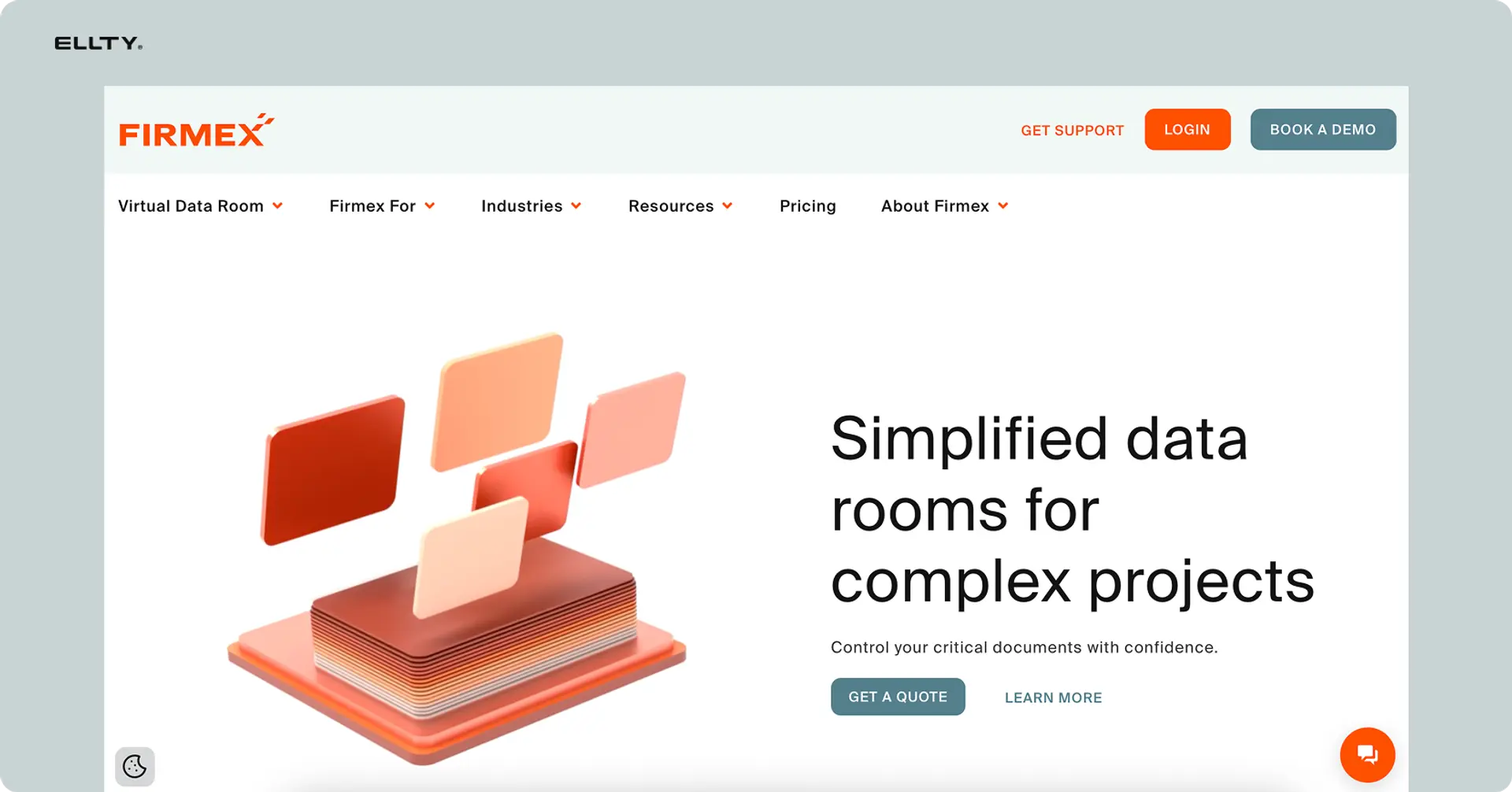
Firmex is an enterprise virtual data room (VDR) platform used primarily for M&A transactions, due diligence, and secure document sharing. Founded in 2006 and based in Toronto, they've been around longer than most VDR providers.
Key features:
- Secure document storage and sharing for M&A deals
- Granular permission controls and user activity tracking
- Q&A workflow for due diligence questions
- AI-powered document organization and indexing
- Compliance certifications (SOC 2, ISO 27001)
- 24/7 customer support for deal teams
Market position: Firmex positions itself as a mid-market to enterprise VDR solution. They're known for serving investment banks, private equity firms, and corporate development teams on complex transactions. The platform has facilitated over $2 trillion in deals.


Current Firmex pricing (2026)
Firmex uses 100% custom pricing. There's no published price list, no self-serve plans, and no online calculator.
Billing structure: Pricing is typically per-project or per-deal, not per-user. You pay for the data room duration, storage amount, and number of users. Most contracts are month-to-month for individual deals, though some firms negotiate annual agreements for multiple transactions.
How Firmex pricing works
You'll need to contact sales for:
- Number of users expected
- Storage requirements (GBs needed)
- Deal timeline (how many months)
- Feature requirements
- Support level needed
Pricing model options:
Per-project pricing - Most common for one-off M&A deals. You pay a flat fee for the duration of your transaction (typically 3-6 months).
Annual subscription - For firms running multiple deals per year. Monthly fee covers unlimited deals up to certain storage/user limits.
What influences your quote:
- Deal size and complexity
- Number of external users (bidders, advisors)
- Storage volume (documents, size of data room)
- Advanced features (AI indexing, custom branding)
- Contract length commitment
- Whether you're using a broker/advisor who gets commission
Reported pricing ranges
Based on user reviews on G2, Capterra, and direct reports:
Small deals (under 1GB, 10-20 users, 3 months): $5,000 - $10,000 per project
Who it's for: Smaller M&A transactions, fundraising rounds, simple due diligence.
What's included:
- Basic VDR setup and configuration
- Standard permission controls
- Activity tracking and reporting
- Q&A module
- Standard support (business hours)
- Basic document indexing
Key limitations:
- Storage caps at 1-2GB typically
- Limited customization options
- No dedicated account manager
- Standard security features only
Best for: Small business sales, early-stage fundraising, straightforward deals without complex requirements.
Mid-size deals (1-5GB, 20-50 users, 3-6 months): $10,000 - $25,000 per project
Who it's for: Mid-market M&A, growth equity raises, competitive sale processes.
What's included:
- Everything in small deals
- AI-powered document indexing
- Custom branding options
- Advanced analytics and reporting
- Priority support
- More storage headroom
- Greater user capacity
Key limitations:
- Still capped storage (overages expensive)
- Implementation timeline (1-2 weeks typical)
- Limited customization without add-ons
Best for: Companies running competitive processes with multiple bidders, deals requiring detailed analytics, transactions with 10+ interested parties.
Large deals (5GB+, 50+ users, 6+ months): $25,000 - $75,000+ per project
Who it's for: Enterprise M&A, large private equity deals, complex carve-outs.
What's included:
- Everything in mid-size deals
- Dedicated account manager
- Custom workflows and automations
- Advanced security features
- 24/7 premium support
- Extensive storage (10GB+)
- Unlimited users in many cases
- White-glove setup and training
Key limitations:
- Requires longer sales cycle
- Implementation can take 2-4 weeks
- Minimum contract values apply
Best for: Billion-dollar transactions, multi-jurisdictional deals, complex due diligence requiring extensive documentation.
Annual subscriptions: $50,000 - $200,000+ per year
Who it's for: Investment banks, PE firms, corporate development teams running multiple deals annually.
What's included:
- Unlimited projects (within storage/user limits)
- Pooled storage allocation
- Dedicated support team
- Custom training programs
- API access for integrations
- Volume discounts on overages
Pricing factors:
- Expected deal volume per year
- Total storage allocation needed
- Average users per deal
- Advanced feature requirements
Best for: Firms closing 5+ deals per year, organizations wanting predictable VDR costs, teams needing consistent platform access.
Costs not shown in base pricing
Setup and implementation:
- White-glove setup: Included in most quotes
- Custom integrations: $2,000 - $10,000 depending on complexity
- Advanced training beyond standard onboarding: $1,000 - $3,000
Overage charges:
- Extra storage: $500 - $2,000 per additional GB
- Additional users beyond quote: $100 - $300 per user per month
- Extended timeline: $2,000 - $5,000 per additional month
Optional add-ons:
- Advanced AI features: Custom pricing
- Enhanced branding and customization: $1,000 - $5,000
- Additional admin users: Often included, sometimes $500+
- Premium support packages: Typically included in larger deals
Third-party costs:
- Integration with other deal tools: Variable
- Migration from previous VDR: Often handled by Firmex, but data prep time required
Real costs for teams
Per-project pricing means your costs depend entirely on your deal characteristics. Here's what Firmex actually costs for common scenarios.
Scenario 1: Small business sale
Deal size: Selling a $10M business
Timeline: 4 months
Users: 15 (seller team + 3-4 potential buyers)
Storage needed: 500MB
Recommended setup: Small project package
Estimated cost: $7,500
Monthly equivalent: $1,875
What this includes:
- Basic VDR setup with standard folder structure
- User permission management
- Activity tracking and basic analytics
- Q&A module for buyer questions
- Standard support (business hours, email/phone)
Limitations to watch:
- Storage overages if you exceed 1GB
- Additional costs if deal extends beyond 4 months
- Limited customization options
- No dedicated account manager
Scenario 2: Series B fundraising
Deal size: $30M fundraising round
Timeline: 5 months
Users: 35 (company team + 8-10 interested investors)
Storage needed: 2GB
Recommended setup: Mid-size project package
Estimated cost: $15,000
Monthly equivalent: $3,000
What this includes:
- AI-powered document indexing
- Custom branded data room
- Advanced analytics on investor engagement
- Priority support
- Q&A workflow management
Limitations to watch:
- May need storage upgrade if adding video content
- User additions beyond 40-50 trigger overages
- Timeline extension costs if negotiations drag
Scenario 3: Mid-market M&A sale
Deal size: Selling $100M company
Timeline: 6 months
Users: 60 (seller advisors + management + 5-7 bidders with teams)
Storage needed: 4GB
Recommended setup: Large project package
Estimated cost: $35,000
Monthly equivalent: $5,833
What this includes:
- Full white-glove setup and management
- Dedicated account manager
- Advanced security features
- Custom workflows for multi-phase process
- Extensive analytics and reporting
- 24/7 support access
Limitations to watch:
- Complex integrations may add costs
- If deal goes to 8+ months, expect $5K-10K extension fee
- Storage overages if adding extensive video or technical files
Scenario 4: Enterprise carve-out
Deal size: $500M+ division sale
Timeline: 9 months
Users: 100+ (multiple bidder teams, advisors, legal, consultants)
Storage needed: 8GB
Recommended setup: Enterprise project package
Estimated cost: $60,000 - $80,000
Monthly equivalent: $6,667 - $8,889
What this includes:
- Everything in large package
- Custom security protocols
- Advanced compliance features
- Multiple admin roles with granular controls
- Custom API integrations
- Executive reporting dashboards
Limitations to watch:
- Very large file repositories may need custom storage pricing
- International data residency requirements may add costs
- Extensive customization requests beyond standard features
Scenario 5: PE firm annual subscription
Deal volume: 6-8 deals per year
Users: Variable per deal (30-80 typical)
Storage needed: 15GB pooled across deals
Recommended setup: Annual unlimited subscription
Annual cost: $90,000
Monthly equivalent: $7,500
Per-deal cost: $11,250 - $15,000 (if running 6-8 deals)
What this includes:
- Unlimited deal rooms within storage allocation
- Dedicated support team familiar with your firm
- Consistent branding across all deals
- Quarterly training refreshers
- Priority feature access
Limitations to watch:
- Storage pool shared across all active deals
- May still pay overages for unusually large transactions
- Contract typically requires 12-month commitment
Cost comparison table


Hidden cost multipliers:
Costs increase when you need:
- Deal extensions beyond original timeline (common in M&A) - add 20-30% of original quote per additional month
- Storage overages from video files or technical documentation - $500-2,000 per GB
- Additional user seats mid-deal as more advisors join - $100-300 per user
- Custom features or integrations requested after setup - $2,000-10,000 depending on scope
- Premium support upgrades for 24/7 coverage on smaller deals - typically 15-25% of base cost
What teams actually need
Most firms pay for features they never use because Firmex pricing is opaque. Here's what actually matters for different use cases.
Simple business sale or fundraise
Must-have features:
- Secure document upload and organization
- Basic permission controls (view-only, download rights)
- Activity tracking (who viewed what, when)
- Q&A module for buyer questions
- Download reports for audit trail
Nice-to-have features:
- Custom branding
- AI document indexing
- Advanced analytics
Skip these features:
- Dedicated account manager
- Custom workflows and automations
- API integrations
- 24/7 premium support
Recommended setup: Small project package ($7,500 - $10,000)
Most simple deals don't need enterprise features. You're paying for security and basic tracking, not complex workflows.
Competitive M&A process
Must-have features:
- Granular permission controls (different access for different bidders)
- Detailed analytics on which bidders are engaged
- Q&A workflow with assignable questions
- Watermarking and document security
- Audit trail for compliance
Nice-to-have features:
- AI-powered indexing for large doc sets
- Custom reporting dashboards
- Priority support
- Dedicated account manager for complex coordination
Skip these features:
- API integrations unless connecting to existing deal tools
- Advanced compliance features beyond standard SOC 2/ISO
Recommended setup: Mid-size to large project package ($15,000 - $40,000 depending on deal size)
Competitive processes need strong analytics to know which buyers are serious. Worth paying for detailed tracking.
PE firm running multiple deals
Must-have features:
- Consistent platform across all deals
- Pooled storage allocation
- Template deal rooms for faster setup
- Dedicated support team familiar with your processes
- Volume pricing vs. per-deal costs
Nice-to-have features:
- Custom integrations with CRM or deal management tools
- Executive dashboards across portfolio
- Custom training programs
Skip these features:
- White-glove setup for every single deal (use templates)
- Premium features on smaller portfolio company sales
Recommended setup: Annual subscription ($50,000 - $150,000 depending on volume)
If you're running 5+ deals per year, annual subscriptions save money and provide consistency.
Enterprise complex transaction
Must-have features:
- Advanced security and compliance certifications
- Custom workflows for multi-phase processes
- Dedicated account manager
- 24/7 support access
- Extensive storage for large document sets
- Multiple admin roles with different permissions
Nice-to-have features:
- Custom API integrations
- Advanced AI features
- Executive reporting
Skip these features:
- Nothing. If you're doing a billion-dollar deal, don't cut corners on the VDR.
Recommended setup: Enterprise package ($50,000+)
Large transactions justify premium pricing. The VDR cost is tiny compared to overall deal costs and risk.
Decision framework
Ask yourself:
How long will your deal take?
- Under 3 months: Negotiate hard on pricing, deals often extend
- 3-6 months: Standard timeline, quote should reflect full period
- 6+ months: Get timeline extension costs in writing upfront
How many users will you have?
- Under 20: Small package works
- 20-50: Mid-size package
- 50+: Large package or negotiate unlimited users
How much data?
- Under 1GB: Small package
- 1-5GB: Mid-size package
- 5GB+: Large package, get overage costs confirmed
How complex is your process?
- Straightforward sale to one buyer: Basic features fine
- Competitive auction: Need strong analytics
- Multi-jurisdictional: Need advanced compliance and security
What's your risk tolerance?
- High-stakes deal: Don't cheap out, get premium support
- Lower-value transaction: Basic features sufficient
What users say about Firmex pricing
We reviewed hundreds of user comments on G2, Capterra, and Trustpilot. Here's what actual customers say about Firmex pricing.
What users like
Transparent once you're in the process:
"After the initial contact, they were very upfront about costs and what would trigger additional fees. No surprises during our deal."
— VP Corporate Development, G2
Flexible for deal extensions:
"When our M&A process took 3 extra months, they worked with us on the extension costs rather than hitting us with the full rate."
— Investment Banker, Capterra
Common pricing complaints
No public pricing makes budgeting impossible:
"I needed to get three quotes before I could even budget for a VDR. Firmex wouldn't give me a ballpark without a 30-minute sales call. Just publish your pricing."
— CFO, G2
Expensive compared to alternatives:
"We paid $18,000 for a relatively simple deal. I later learned we could have used other platforms for $5,000-8,000 with similar features."
— M&A Advisor, Trustpilot
Overage fees add up:
"The base quote seemed reasonable, but we got hit with $3,000 in storage overages and another $2,000 for timeline extension. Should have been clearer upfront."
— Corporate Development Manager, G2
Sales process takes too long:
"From first contact to signed contract took 3 weeks. For time-sensitive deals, that's painful. I needed a VDR set up in days, not weeks."
— Private Equity Associate, Capterra
Per-project pricing doesn't scale well:
"We do 10+ deals per year. Paying $10K-15K per deal was killing our budget. Eventually negotiated an annual contract but wish that was offered upfront."
— Head of Corp Dev, G2
Is Firmex worth the cost?
User sentiment is mixed. Investment bankers and advisors working on large M&A deals generally find Firmex worth the cost for the security, support, and features. The platform handles complex transactions well and support is responsive.
Smaller companies and infrequent users often feel they're overpaying. Many report that Firmex's features are more than they needed, and the cost didn't match the value for straightforward deals.
Users who run multiple deals per year on annual subscriptions report better value than per-project pricing. The lack of transparent pricing frustrates nearly everyone initially, though most say the sales process improves once you're actually in discussions.
Firmex vs alternatives: quick comparison
Here's how Firmex pricing compares to similar tools. All prices for comparable plans.


Ellty - Free to $69/3 users/month
- Free plan includes document tracking, real-time engagement analytics, and secure shareable links - forever
- Standard plan ($69/month) adds eSignatures, full virtual data room functionality, advanced analytics, custom branding, and advanced access controls
- Data Room plan ($149/month) unlocks granular permissions, NDA gating, dynamic watermarking, and restricted visitor access for structured due diligence
- No per-project fees, no per-user charges, no surprise overages
- Best for seed to Series B companies managing investor outreach, eSignatures, and due diligence under one affordable roof
- Not built for complex M&A transactions, but covers everything most startups need through Series B fundraising
When it makes sense: If you're sharing pitch materials with investors, not running formal due diligence. Costs $468/year for 3 users vs. $7,500+ for Firmex project.
Intralinks - Custom quote (~$10,000+ per deal)
- Similar pricing model to Firmex (per-project or annual)
- Generally more expensive, starting $10,000-15,000 for small deals
- Stronger brand recognition in investment banking
- More expensive enterprise features
- Best for very large transactions where cost isn't the primary concern
When it makes sense: When you need the most recognized VDR brand for credibility with sophisticated buyers, or when your deal is large enough that VDR cost is irrelevant.
DealRoom - Custom quote (~$5,000+ per deal)
- Per-project pricing similar to Firmex
- Includes M&A pipeline management tools
- Generally 20-30% less expensive than Firmex for comparable deals
- Better for firms managing multiple deals simultaneously
- Best for corporate development teams, not one-off transactions
When it makes sense: If you want deal pipeline tools integrated with your VDR, or you're managing multiple active processes.
DocSend - $10/user/month
- Transparent per-user pricing
- Not a full VDR, focused on document sharing and tracking
- $120/year per user vs. $7,500+ for Firmex project
- Works for simple fundraising, not complex M&A
- Best for sharing pitch decks, investor updates, limited due diligence
When it makes sense: Early-stage fundraising where you need tracking but not formal VDR security. Significant cost savings for straightforward deals.
CapLinked - Custom quote (~$4,000+ per deal)
- Generally less expensive than Firmex (30-40% lower for comparable deals)
- Per-project pricing but with published ranges
- Strong in real estate and mid-market M&A
- Less robust for very complex transactions
- Best for cost-conscious mid-market deals
When it makes sense: When you need VDR features but want to save 30-40% vs. Firmex, and your deal doesn't require top-tier platform.
Cost comparison for common scenarios
For a $20M Series B fundraising round (5 months, 30 users, 2GB storage):


For a mid-market M&A deal (6 months, 50 users, 4GB storage):


When Firmex makes sense:
- You're running a mid-market to large M&A transaction
- You need proven VDR with strong security certifications
- You want dedicated support for complex deals
- Your deal justifies $15,000+ VDR costs
- You're working with sophisticated buyers who expect enterprise VDR
When alternatives make sense:
- You're fundraising but not in formal due diligence yet (use Ellty or DocSend)
- You run many deals per year and want lower per-deal costs (compare DealRoom, CapLinked)
- You need transparent pricing to budget accurately (avoid all custom-quote VDRs)
- Your deal is straightforward and doesn't need enterprise features (use lower-cost options)
- You want to test the platform before committing thousands (use tools with free trials or freemium models)
Special offers & discounts
Firmex doesn't advertise discounts publicly, but here's how to save money if you choose them.
Current promotions
Firmex occasionally runs promotions for first-time customers or through partner referrals. Check with your M&A advisor or investment banker - they often have relationships that get you 10-15% off your first deal.
How to save money:
Annual contracts vs. per-project: If you run 4+ deals per year, negotiate an annual subscription. You'll typically save 20-30% compared to paying per-project rates. A firm paying $15,000 per deal × 5 deals = $75,000 could negotiate annual contracts for $50,000-60,000.
Commit to longer deal timelines upfront: If you know your deal will take 6 months, negotiate 6 months upfront rather than 3 months + extensions. Extension fees are typically 25-40% more expensive than including time in original contract.
Bundle multiple deals: Even if you don't want an annual contract, bundling 2-3 known deals into one agreement gets you 10-20% discount vs. separate projects.
Pay upfront vs. monthly: Some quotes offer payment plan options. Paying the full amount upfront sometimes gets you 5-10% discount vs. monthly installments.
Startup/accelerator programs:
Firmex doesn't have a formal startup program, but some accelerators (Y Combinator, Techstars) have negotiated group rates for portfolio companies. Ask your accelerator if they have VDR partnerships.
Educational pricing:
Not applicable - Firmex is for commercial transactions only.
Non-profit discounts:
Not typically offered, though they may work with you on pricing for non-profit mergers or restructurings. Worth asking if applicable.
Free trial strategy:
Firmex offers demos but not free trials of the full platform. You can request a demo environment to test features before signing, which helps avoid paying for features you don't need.
Negotiation tips (for all deals):
Get multiple quotes: Tell them you're evaluating Intralinks, DealRoom, and CapLinked. Competition matters.
Be specific about your needs: The more accurate your user count, storage, and timeline estimates, the better your quote. Vague requirements lead to padded quotes.
Ask about overage costs upfront: Get storage overages, timeline extensions, and additional user costs in writing before signing. This is where they make extra margin.
Negotiate support levels: If your deal doesn't need 24/7 support, ask for standard business hours only. Can save 10-15%.
Question every add-on: Ask what's actually included in base price vs. optional add-ons. Often they'll throw in "extras" that should be standard.
Leverage your network: If your investment banker or advisor has a relationship with Firmex, use it. They often get better rates than direct customers.
Be willing to walk: If the quote feels high, say so. Firmex will usually come back with a better offer rather than lose the deal entirely.
How to calculate your true cost
Base price is just the start. Here's how to calculate what you'll actually pay for Firmex.
Step 1: Base subscription
Get your initial quote:
- Contact Firmex sales with your deal parameters
- Users expected: ___
- Storage needed: ___
- Timeline: ___
- Base quote: $___
Example:
- 40 users, 3GB storage, 5 months
- Base quote: $18,000
Step 2: Add-ons and extras
Storage buffer: Add 25-30% to your estimated storage. Files add up quickly.
- Estimated storage: 3GB
- Actual likely need: 4GB
- Potential overage: 1GB × $1,000 = $1,000
Timeline buffer: M&A deals frequently extend. Budget for at least 1 extra month.
- Original timeline: 5 months
- Likely reality: 6 months
- Extension cost: $3,000
Additional user seats: As advisors and bidders join, users multiply.
- Original estimate: 40 users
- Actual peak: 55 users
- Additional users: 15 × $150 = $2,250
Custom features: Any special requests beyond standard features.
- Custom integration: $0 (not needed in this example)
- Enhanced branding: $0 (included in mid-tier)
Add-on total: $6,250
Step 3: Implementation
Internal time costs:
- Document organization and upload: 20 hours × $100/hour = $2,000
- Admin training and setup: 5 hours × $100/hour = $500
- Ongoing management: 10 hours × $100/hour = $1,000
Firmex setup:
- White-glove setup: Included in most quotes
- Custom training: $0 (standard training included)
Implementation total: $3,500
Step 4: Ongoing costs
Support and maintenance:
- Included in most packages
- Premium support upgrades: $0 (not needed)
Document management:
- Ongoing Q&A responses: Internal cost, not VDR cost
- Permission updates: Included
Ongoing total: $0
Total first-year cost:
- Base quote: $18,000
- Add-ons and overages: $6,250
- Implementation: $3,500
- Ongoing: $0
Total: $27,750
True monthly cost (amortized):
$27,750 ÷ 6 months = $4,625 per month
That's 54% more than the base quote suggested.
Hidden costs to remember:
Deal extensions are common: Budget at least 1-2 extra months beyond your initial timeline estimate.
Storage grows: Initial data room estimates rarely account for Q&A documents, updated financials, and additional diligence materials added mid-process.
User seat creep: Bidders bring advisors, advisors bring associates. User counts frequently exceed initial estimates by 20-40%.
Internal labor: Organizing documents, managing permissions, responding to Q&A - this takes significant internal time beyond the VDR cost.
Opportunity cost: If the VDR is slow to set up or difficult to use, deal timeline extends, which has real costs to your business.
Compare this to alternatives:
Same deal on Ellty (assuming it met your security needs):
- Data Room plan: $149/month × 6 months = $894
- No overage fees, no per-user charges beyond included seats
- Full data room functionality with NDA gating, granular permissions, and dynamic watermarking included
- Total: $894 (99% savings vs. Firmex)
Same deal on CapLinked:
- Base quote: $10,000
- Overages: $3,000
- Implementation: $2,000
- Total: $15,000 (46% savings vs. Firmex)
Same deal on DocSend:
- 5 users × $10/month × 6 months = $300
- Total: $300 (99% savings vs. Firmex)
The question isn't just what Firmex costs - it's whether the additional features justify 5-90× the price for your specific deal.
Switch to Ellty (free Firmex alternative)

Firmex charges thousands per deal with opaque pricing. For many fundraising and early-stage deals, you're paying for enterprise features you don't need.
Ellty takes a different approach — transparent pricing, generous storage, and features built specifically for document sharing, investor analytics, and due diligence. Not saying it replaces Firmex for complex M&A, but for most startup fundraising use cases, you don't need an enterprise VDR.
Ellty Free - $0 forever
- Document tracking and real-time engagement analytics
- Secure shareable links with view tracking
- Page-by-page analytics (views, time spent per page)
- Real-time notifications when documents are viewed
- Aggregate & individual visit dashboard
- Password protection and link expiration controls
- 10 GB storage per user
Best for: Testing investor interest, sharing fundraising materials, early conversations with potential investors.
Ellty Standard - $69/month
- Everything in Free, plus:
- Full virtual data room with folder organization and granular permissions
- NDA gating and secure viewer email authentication
- Dynamic watermarking to prevent leaks
- eSignatures — create, send, and collect natively
- Advanced analytics dashboard and visitor export
- Custom branding and branded custom subdomain
- Restricted visitor access and download controls
- Priority email support
- 50 GB storage per user
Best for: Active fundraising, formal investor due diligence, seed through Series B rounds.
Side-by-side comparison: Firmex vs Ellty


What you save with Ellty:
For a typical Series B fundraising (5 months, 30 investors viewing materials):
- Firmex: $15,000
- Ellty Data Room: $745 (5 months × $149)
- Savings: $14,255 (95%)
For ongoing fundraising (12 months of active conversations):
- Firmex: Would require new project quote or annual contract ($20,000+)
- Ellty Data Room: $1,788 (12 months × $149)
- Savings: $18,212+
When Ellty makes sense:
You're fundraising, not selling your company: Series A, B, C rounds don't need the same security infrastructure as M&A transactions. Ellty gives you the analytics you need without enterprise VDR overhead.
You want transparent pricing: Know exactly what you'll pay before you start. No surprise overages, no negotiation required.
You need to move fast: Set up a data room in minutes, not weeks. Start sharing materials same day.
You share pitch materials frequently: If you're constantly updating investors or sharing decks with potential partners, per-project pricing doesn't make sense.
Cost actually matters: If you're pre-revenue or early-stage, spending $10,000+ on a VDR is a real budget hit. Ellty costs less than your monthly SaaS tools.
When to stick with Firmex:
You're running a formal M&A process: Selling your company to sophisticated buyers who expect enterprise VDR security and features.
You need SOC 2 / ISO 27001 certifications: Regulatory requirements or buyer demands require certified security infrastructure.
You have complex Q&A workflows: Due diligence processes with hundreds of questions requiring assignment and tracking.
Buyer expectations matter: Some investment banks and PE firms expect to see recognized VDR brands. Perception matters in high-stakes deals.
Budget isn't a constraint: If you're doing a $500M transaction, VDR cost is irrelevant. Use the best tool regardless of price.
Migration is simple:
- Upload your pitch deck and materials to Ellty (drag and drop)
- Organize into folders if needed (or keep it simple)
- Create trackable links for each investor
- Share links via email
- Watch analytics in real-time as investors view materials
No sales calls, no implementation timeline, no multi-week setup. Start sharing in the time it took to read this section.
Quick answers
Does Firmex have a free plan?
No. Firmex doesn't offer a free plan or free tier. All usage requires a paid contract, typically starting around $7,500 for small deals.
Does Firmex offer a free trial?
Not a traditional free trial. They offer product demos where you can see the platform, but you can't upload your own documents and test it yourself without signing a contract. Some sales reps will set up a demo environment with your data if you're serious about buying, but this is case-by-case.
Does Firmex have monthly billing or only annual?
Both. Per-project pricing is typically structured as a flat fee for your deal duration (e.g., $15,000 for 5 months), paid upfront or in installments. Annual subscriptions for firms running multiple deals are billed monthly or quarterly depending on your contract terms.
What payment methods does Firmex accept?
Wire transfer, ACH, and credit card (for smaller deals). Most enterprise contracts are paid via wire transfer or ACH. Credit card payments sometimes incur 2-3% processing fees.
Does Firmex charge for implementation or onboarding?
Implementation and standard onboarding are typically included in your quote for mid-size and large deals. However, custom integrations, advanced training beyond standard onboarding, or extensive white-glove setup may cost extra ($1,000 - $10,000 depending on requirements).
Can I cancel anytime?
Depends on your contract. Per-project agreements typically run for the deal duration with specific end dates. You can't cancel mid-deal without paying the full contract amount. Annual subscriptions usually have 30-60 day cancellation notice requirements and may have minimum commitments (12 months common).
Does Firmex have an API?
Yes, but API access is typically only available on enterprise plans or annual subscriptions. Per-project deals don't usually include API access unless specifically negotiated and paid for.
Does Firmex have a mobile app?
Yes. Firmex has iOS and Android apps that let users access data rooms, view documents, and track activity on mobile devices. Mobile app access is included in all plans.
Are there limits on storage or documents?
Yes. Storage limits depend on your specific quote. Small deals might get 1-2GB, mid-size deals 3-5GB, large deals 10GB+. Document count isn't typically limited, but total storage is. Exceeding your storage allocation triggers overage fees of $500-2,000 per additional GB.
Do I need to pay per user or can I share one account?
Firmex pricing accounts for expected user counts, but you don't pay strict per-user fees like monthly SaaS tools. However, if you significantly exceed your estimated user count, you may face additional charges. Account sharing violates terms of service and creates security risks - each user should have their own login for proper audit trails.
What happens if I exceed my plan limits?
You get hit with overage fees. Storage overages cost $500-2,000 per additional GB. Timeline extensions cost approximately 20-30% of your original quote per additional month. Additional users beyond your estimate cost $100-300 per user per month. These overages are where Firmex makes additional margin, so estimate conservatively and get overage rates in writing before signing.
Does Firmex offer refunds?
Generally no. Once you've signed a contract and the data room is set up, you're committed to the full contract value even if your deal falls through or you decide not to use the platform. Some contracts may have early termination clauses with penalties, but don't expect refunds. This is why accurate timeline and requirement estimates matter - you'll pay for what you commit to regardless of actual usage.
Author

Anika Tabassum Nionta is a Content Manager at Ellty, where she writes about secure document sharing, virtual data rooms, M&A, due diligence, fundraising, and sales enablement. With over 6 years of writing experience, she helps professionals understand how to share confidential documents securely, track engagement, and manage deals more effectively. Anika holds both a BA and MA in English from Dhaka University. Outside of work, she enjoys reading, exploring new cafes in Dhaka, and connecting with entrepreneurs and dealmakers in her community.

