
DealRoom is a solid M&A project management platform. It combines virtual data room capabilities with deal pipeline management, helping teams track multiple transactions simultaneously. The project management features integrate with tools like Slack and Excel, and the platform handles both buy-side and sell-side M&A processes.
We've been testing alternatives to DealRoom for the past few months. Why? Several reasons kept coming up: pricing structure for smaller teams, the learning curve for straightforward deals, and feature sets that optimize for serial acquirers when you just need to manage one transaction or share documents securely.
Some teams need full M&A lifecycle management with pipeline tracking. Others need simple virtual data rooms for due diligence. A few want pitch deck sharing with analytics instead of complex deal workflows. DealRoom excels at managing multiple concurrent acquisitions for corporate development teams, but that's not always what you need.
We personally tested 7 alternatives. Some focus on virtual data rooms without project management overhead. Others offer simpler document sharing with engagement analytics. A few provide deal management features with different workflow approaches. We tested setup processes, uploaded sample documents, explored project management tools, and talked to teams using these platforms daily.
Here's what we discovered. No fluff, just what each tool does well and who it serves best.
Key takeaways
The M&A and deal management market offers many DealRoom alternatives, each with different strengths for project management, pure VDR security, fundraising workflows, or document analytics.
Several alternatives offer focused capabilities - enterprise VDR platforms, AI-powered insights, or fundraising automation - compared to DealRoom's integrated M&A project management approach.
Many modern solutions either combine VDR with pipeline tracking like DealRoom, focus purely on transaction security, or adapt deal management concepts specifically for fundraising rather than corporate M&A.
Why look for a DealRoom alternative?
DealRoom handles M&A project management well. The platform combines virtual data room capabilities with deal pipeline tracking, helping corporate development teams manage multiple concurrent acquisitions. The integration with tools like Slack and Excel streamlines workflows for serial acquirers.
But DealRoom isn't the only option, and it's not always the best fit for every team.
Better features for the price
Several alternatives offer comparable virtual data room capabilities with different pricing structures. Some provide pure VDR features without project management complexity you might not need. Others offer AI-powered insights or fundraising-specific workflows that DealRoom doesn't emphasize.
We found tools with transparent pricing you can evaluate immediately instead of requiring sales conversations for custom quotes. Some alternatives focus specifically on mid-market deals with faster setup processes. A few provide features like bidder scoring or investor relationship management that DealRoom lacks entirely.
For fundraising specifically, alternatives built for startups offer terminology and workflows that feel more natural than M&A-centric platforms. You might not need acquisition pipeline tracking if you're raising a Series A.
Different workflow needs
DealRoom focuses specifically on M&A project management for corporate development teams tracking multiple deals. That's great if you need exactly those features. But if you're running a single transaction, raising capital, or just need a secure data room without pipeline management, you might benefit from a more focused platform.
Some teams need enterprise-grade virtual data rooms with maximum security for large transactions. Others need simpler document sharing with engagement analytics for fundraising. A few need AI-powered deal insights rather than traditional project tracking.
The right alternative depends on what you're actually trying to accomplish. Corporate development teams managing acquisition pipelines need different tools than startups raising seed rounds. Investment banks running large M&A processes need different features than mid-market companies doing their first deal.
Cost considerations
DealRoom uses custom pricing that requires sales conversations. For smaller teams, single transactions, or fundraising rounds, this pricing structure doesn't always make sense. We found alternatives with transparent monthly rates starting at $149, and others with flat-rate pricing under $50/month for basic document sharing.
The feature-to-cost ratio varies significantly. You might be paying for M&A pipeline management and project tracking features when you just need a secure data room for one transaction. Several alternatives provide core VDR functionality without the project management overhead.
For teams that don't need multi-deal pipeline tracking, simpler alternatives offer better value. Enterprise platforms cost more but provide security documentation and brand recognition that matters for large deals. Match your actual needs to pricing models that make sense for your situation.
DealRoom alternatives overview
Here are the best DealRoom alternatives in 2026 for any business (in our opinion)
- Ellty - Virtual data room software for fundraising
- Datasite - Enterprise M&A virtual data rooms
- Firmex - Mid-market deal management
- Intralinks - Large-scale transaction platform
- Ansarada - AI-powered deal insights
- CapLinked - Fundraising workflow automation
- DocSend - Document tracking and engagement
What are the best DealRoom alternatives?
The best DealRoom alternative depends on what you're actually trying to accomplish.
For enterprise M&A transactions: Datasite when you need the market-leading platform for large, complex deals. Investment banks and private equity firms mention Datasite frequently - the brand recognition matters when working with institutional parties. Security certifications meet stringent requirements, and the platform handles massive document volumes. Expensive, but optimized for billion-dollar transactions.
For mid-market M&A with faster setup: Firmex when you want virtual data room features with dedicated project manager assistance. Users report 48-hour data room setup with guided configuration. Good for teams running their first M&A process or working against tight deadlines. Focus is on VDR security, not deal pipeline management like DealRoom emphasizes.
For AI-powered deal intelligence: Ansarada when you want bidder scoring and deal outcome predictions. The platform analyzes buyer engagement patterns and tells you which parties are most serious. Higher cost and learning curve, but the insights help prioritize attention during competitive processes. Goes beyond DealRoom's project tracking into predictive analytics territory.
For large complex transactions with established infrastructure: Intralinks when you need comprehensive security certifications and decades of M&A market presence. Large enterprises mention using this for strategic transactions involving regulatory requirements. Traditional enterprise approach with steeper learning curve than modern platforms.
For startup fundraising workflows: CapLinked when you're raising capital and want investor relationship management beyond document storage. Automated follow-ups, task coordination for internal teams, engagement tracking. Built for fundraising terminology and workflows, not corporate M&A language that DealRoom uses.
For document engagement analytics: DocSend when you want page-by-page viewer tracking integrated with sales and marketing tools. Email verification identifies viewers, forwarding tracking shows document spread, Salesforce integration keeps everything in existing workflows. Not built for M&A pipeline management, focused purely on document engagement intelligence.
For pitch deck sharing without complexity: Ellty when you need investor analytics for fundraising without M&A project management overhead. Upload your deck, get trackable links, see which pages investors viewed. Flat-rate pricing, minutes to set up, no deal pipeline features you won't use. Built specifically for founders raising capital.
Different needs, not better or worse. DealRoom works well for corporate development teams managing acquisition pipelines. These alternatives just handle different scenarios - pure virtual data rooms, fundraising workflows, document analytics, or enterprise transaction platforms. Pick based on whether you need M&A project management, simple document sharing, or something in between.
Types of DealRoom alternatives
DealRoom alternatives fall into different categories based on what they actually do.
M&A project management platforms - The core DealRoom model combining virtual data rooms with deal pipeline tracking. DealRoom pioneered this approach of integrating VDR capabilities with project management for teams handling multiple concurrent acquisitions. You're tracking deals across stages, coordinating internal stakeholders, and managing documents all in one platform. Built for corporate development teams at companies making serial acquisitions.
Enterprise virtual data rooms - Pure VDR focus without project management layers. Datasite, Intralinks, and Firmex sit here. Maximum security, compliance certifications, detailed audit trails, and features for managing complex transactions. You're organizing thousands of documents with granular permissions for multiple bidding parties. Built for investment banks, private equity firms, and large corporations where security documentation and brand recognition matter more than modern user interfaces.
AI-powered deal platforms - Traditional deal management enhanced with predictive insights. Ansarada focuses here. Bidder engagement scoring, deal outcome predictions, and intelligence about which buyers are serious. You're getting analytics about the deal itself, not just task completion tracking. Higher complexity and cost, but the insights help prioritize limited attention during competitive processes.
Fundraising workflow platforms - Deal management terminology and features adapted for startup capital raising. CapLinked targets this space. Investor relationship tracking, automated follow-up workflows, task coordination for fundraising teams. You're managing investor conversations and due diligence processes, not corporate acquisitions. Built for startups and mid-market companies raising capital, not enterprises buying companies.
Document engagement analytics - Tracking how people interact with your documents without deal management infrastructure. DocSend and Ellty follow this approach. Page-by-page viewing analytics, real-time notifications, engagement scoring. You're understanding investor or client interest levels through document behavior. Built for fundraising and sales where knowing "did they actually read it?" matters more than managing complex deal pipelines.
Mid-market transaction platforms - Virtual data rooms optimized for smaller deals without full enterprise complexity. Firmex positions here as well. Transparent or semi-transparent pricing, faster setup than enterprise platforms, dedicated support without requiring Fortune 500 budgets. You need proper VDR security but not the feature breadth or cost of platforms built for billion-dollar deals.
Simplified secure sharing - Document security features without comprehensive deal management. Some alternatives provide watermarking, access controls, and tracking without the complexity of full VDR or project management platforms. Good for sharing confidential documents that don't require entire deal infrastructure.
Different problems, different tools. DealRoom sits in the M&A project management category, combining VDR capabilities with pipeline tracking for corporate development teams. These alternatives either focus purely on VDR security, add AI intelligence, adapt workflows for fundraising instead of M&A, or strip away deal management to focus purely on document engagement. Pick based on whether you're managing acquisition pipelines, running single transactions, raising capital, or just sharing documents with analytics.
Quick comparison: DealRoom alternatives at a glance


We tested each of these tools ourselves. Below, we'll break down what we found - the good, the specific use cases, and who each one works best for.
1. Ellty - Secure document sharing, real-time analytics, and virtual data rooms
Ratings and Reviews: Recently launched - early users highlight quick setup and straightforward analytics


We tried Ellty early in our testing because we needed something fast for document sharing and investor due diligence without M&A project management complexity. Ellty offers secure document sharing, trackable links, real-time engagement analytics, eSignatures, and full virtual data rooms - built specifically for founders and small teams. What we appreciated most was how different it felt from DealRoom: no complex project pipelines or heavyweight workflows, just upload your documents, organize your data room, and start tracking investor engagement immediately.
DealRoom vs Ellty


Why founders and small teams love it
When we tested this with a sample pitch deck, the analytics showed exactly which pages investors viewed and how long they spent on each slide. We found this particularly useful for fundraising follow-ups - you can see if someone actually read your financials or just skimmed the intro slides.
The real-time notifications stood out. You get pinged when someone opens your deck. For fundraising where timing matters, you know exactly when to send that follow-up email. DealRoom offers similar tracking, but wrapped in M&A project management features you might not need if you're sharing pitch decks and managing early-stage due diligence.
The virtual data room feature handles due diligence documents without deal pipeline complexity. We uploaded financial statements, legal docs, and cap tables. Simple folder organization with trackable links. Basic permissions - view only or download access - without the granular access control layers that M&A platforms require. eSignatures are built in too, so you're not paying for a separate tool just to collect signatures.
What stood out most in our testing: flat-rate pricing with no per-user fees. You pay one predictable monthly rate regardless of team size or how many investors access your documents. For fundraising teams sharing with multiple stakeholders, this saves significantly compared to platforms charging per user or per deal.
Best for: Seed to Series B founders who need reliable document tracking, eSignatures, and a clean virtual data room for investor due diligence — without M&A project management complexity or enterprise pricing.
Pricing: Free forever for core tracking and analytics; Standard at $69/month with unlimited documents, eSignatures, and data rooms; Data Room plan at $149/month for granular permissions, NDA gating, and dynamic watermarking.
We tested the Standard plan, which gave us unlimited documents, detailed analytics, eSignatures, full data room functionality, and custom branding.
Support: Live chat (Monday–Friday) and priority email support on paid plans. We tested support by asking about notification settings and got a response within a few hours.
"The analytics show exactly who viewed our deck and for how long. Made fundraising follow-ups so much easier."
- Early-stage founder, tested during beta
Try Ellty free if you need document tracking and investor analytics without overhead. Upgrade when you're ready for data rooms, eSignatures, and advanced due diligence features.
2. Datasite - For enterprise M&A transactions
Ratings and Reviews: G2: 4.4/5 ⭐ | Capterra: 4.3/5 ⭐

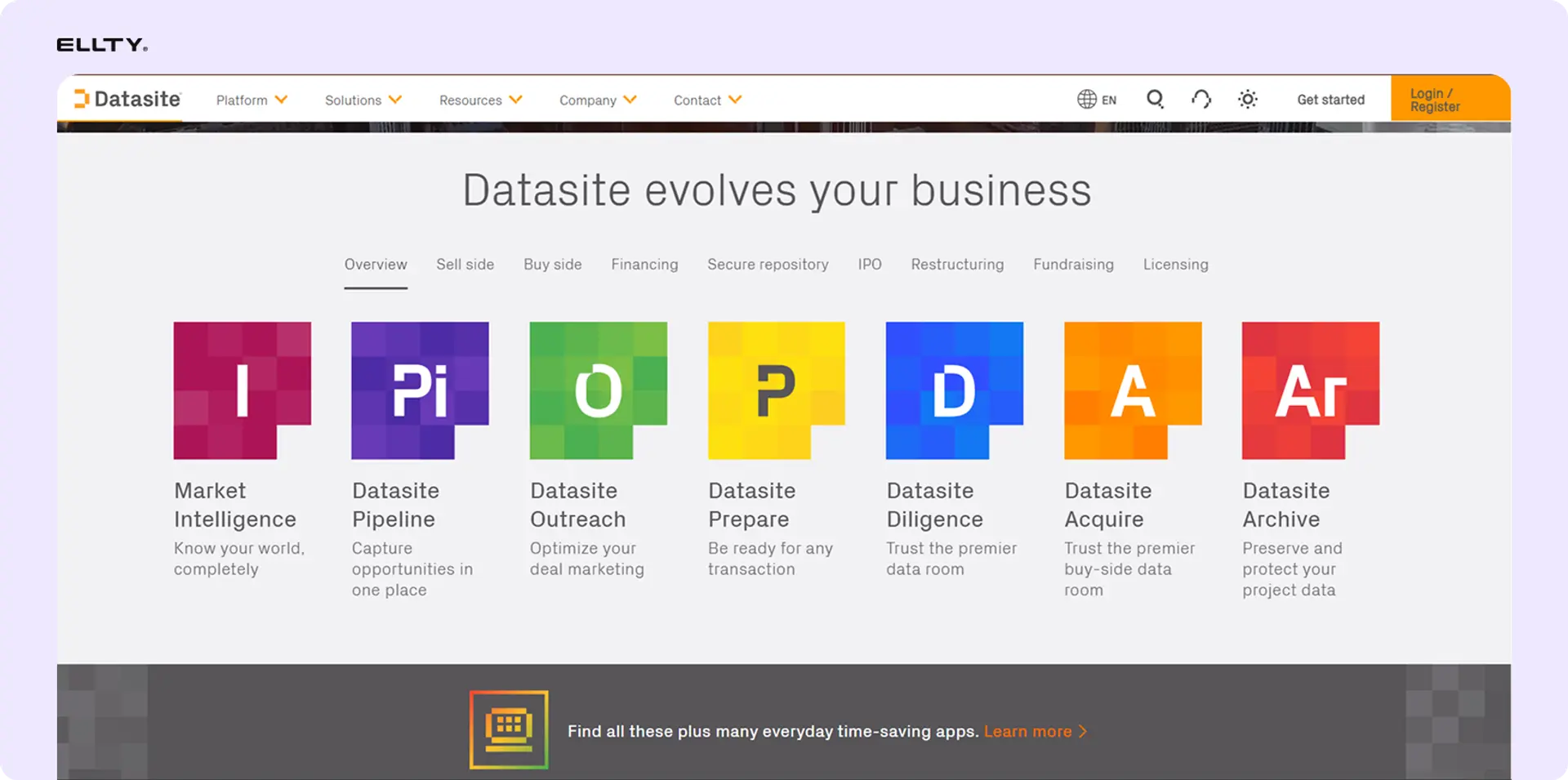
Datasite (formerly Merrill DataSite) dominates the enterprise M&A market. We looked at this platform because it's frequently mentioned as the market leader for large transactions. The company claims to facilitate trillions in deal value annually and serves investment banks, private equity firms, and large corporations.
DealRoom vs Datasite


Why investment banks and large enterprises choose it
Based on user reviews and market research, Datasite handles massive document volumes efficiently. Users in investment banking mention managing data rooms with tens of thousands of documents across complex folder structures. The platform scales to support large deals with hundreds of users and multiple bidding parties.
The security infrastructure meets stringent enterprise requirements. Users report comprehensive audit trails, granular permission controls at the folder and document level, and compliance certifications that satisfy institutional buyers and regulatory bodies. For billion-dollar transactions, this security documentation matters.
Datasite offers AI-powered document classification and Q&A management. According to product documentation and user reviews, the AI helps organize uploaded documents automatically and manages due diligence question workflows between buyers and sellers. Corporate development teams mention this saves time during complex transactions.
The platform integrates with enterprise systems and workflows. Users report connecting Datasite with their existing corporate infrastructure, though integration setup requires technical resources and time.
One consideration: Datasite optimizes for large enterprise deals. Small teams running straightforward transactions mention feeling overwhelmed by feature complexity. The pricing reflects enterprise positioning - expect costs significantly higher than mid-market alternatives.
Best for: Investment banks, private equity firms, and large corporations managing complex M&A transactions where enterprise-grade infrastructure and market-leading brand recognition matter
Pricing: Custom enterprise pricing based on deal size and complexity
Users report projects typically cost tens of thousands of dollars depending on transaction scope and duration.
Support:
24/7 enterprise support with dedicated account teams. Users consistently mention responsive support in reviews, though accessing support requires enterprise-level service agreements.
"Datasite handled our $500M acquisition with ease. The platform managed thousands of documents and 50+ users without performance issues."
- VP Corporate Development, Fortune 500 company, G2
3. Firmex - For mid-market M&A deals
Ratings and Reviews: G2: 4.5/5 ⭐ | Capterra: 4.2/5 ⭐ | Trustpilot: 4.3/5 ⭐


Firmex focuses on mid-market M&A with faster deployment than enterprise-focused platforms. We looked at this platform because it balances virtual data room features with simpler setup processes compared to DealRoom's project management approach.
DealRoom vs Firmex


Why M&A advisors and mid-market teams choose it
Users consistently mention the dedicated project managers in reviews. When you start a data room, Firmex assigns someone to help with setup. For teams running their first M&A process or working against tight deadlines, this guided approach reduces stress compared to platforms where you configure everything yourself.
The platform handles complex permission structures well according to user feedback. You can set different access levels for different folders, add watermarks to sensitive documents, and track every action users take inside the data room. M&A advisors mention needing this granularity when managing multiple bidders with varying information access rights.
Security features include two-factor authentication, dynamic watermarking, and detailed activity reports. Legal teams and investment bankers mention these features in reviews - they need to show clients exactly who accessed which documents during due diligence processes.
Firmex doesn't include the deal pipeline management that DealRoom emphasizes. If you're tracking multiple concurrent acquisitions across different stages, DealRoom's project management features offer more. If you need a secure data room for a specific transaction without broader pipeline tracking, Firmex focuses on that use case.
One limitation: pricing isn't transparent. You need to contact sales for quotes, which slows down evaluation. Users report costs are reasonable for mid-market deals but require negotiation.
Best for: Mid-market M&A teams, investment advisors, and legal teams who need secure virtual data rooms with setup assistance but don't require deal pipeline management
Pricing: Custom pricing based on deal size and duration
Users report project-based pricing typically ranges from several thousand dollars depending on transaction complexity.
Support:
24/7 support with dedicated account managers and project managers for setup. Users consistently mention responsive support teams in reviews.
"Firmex's project manager helped us set up a complex data room in 48 hours. The support made a huge difference when we were under deadline pressure."
- M&A Advisor, Mid-market deals, Capterra
4. Intralinks - For large-scale transaction platforms
Ratings and Reviews: G2: 4.2/5 ⭐ | Capterra: 4.1/5 ⭐
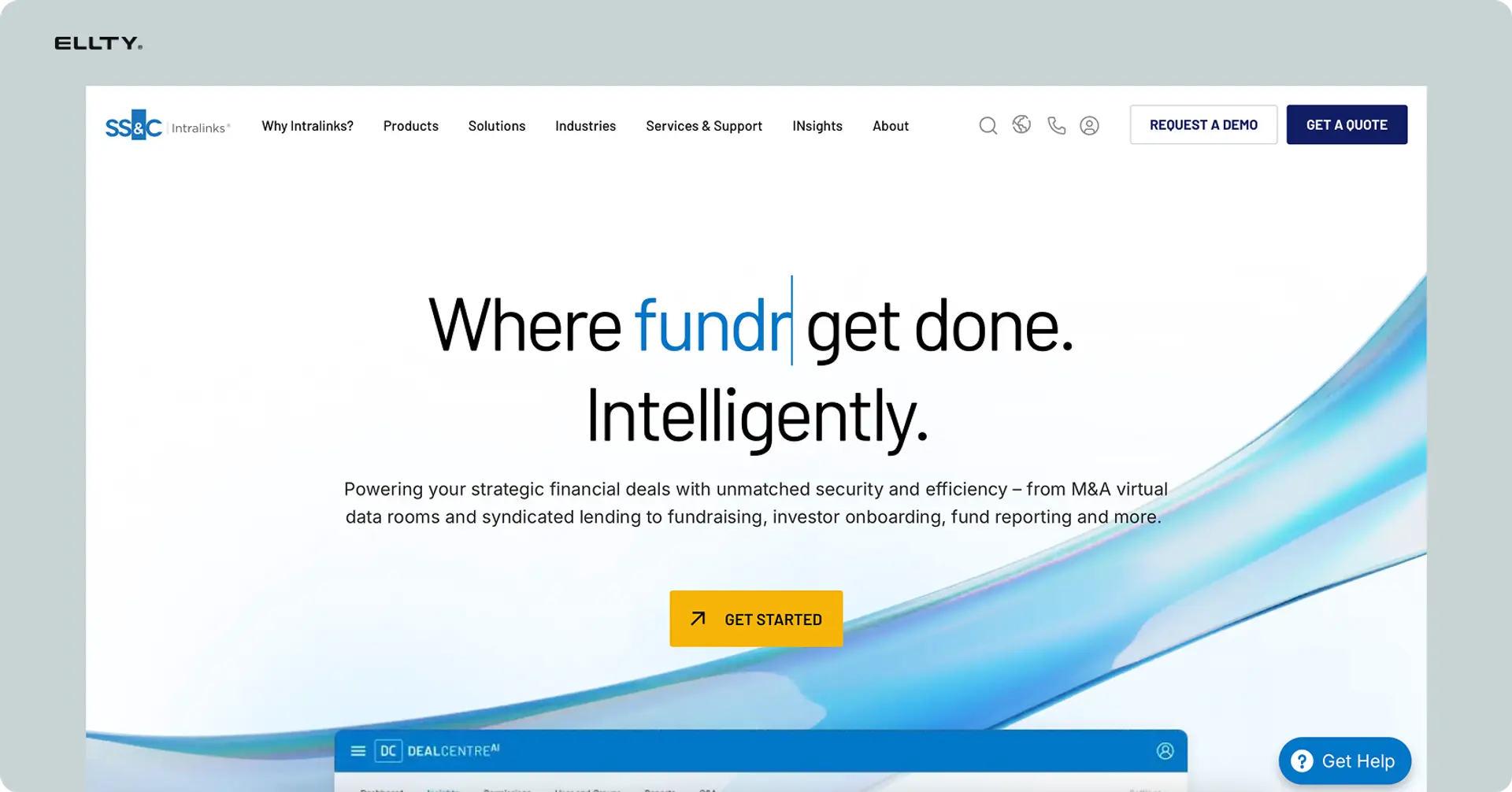
Intralinks has been operating since 1996 and focuses on large, complex transactions. We reviewed this platform because it competes directly with both DealRoom and Datasite in the enterprise M&A space, offering both virtual data rooms and deal management capabilities.
DealRoom vs Intralinks


Why large enterprises with complex needs choose it
According to user reviews and market positioning, Intralinks handles strategic transactions involving multiple parties, regulatory requirements, and extensive documentation. Users in corporate development at Fortune 500 companies mention using Intralinks for carve-outs, divestitures, and cross-border M&A where complexity and scale matter more than simplicity.
The platform offers both virtual data room capabilities and deal pipeline management, similar to DealRoom but with a more traditional enterprise approach. Users report the deal tracking features help manage multiple concurrent transactions, though the interface feels more enterprise-focused than modern project management tools.
Intralinks emphasizes security and compliance heavily. The platform holds numerous security certifications and serves highly regulated industries including financial services and healthcare. Users mention this matters when working with institutional buyers who require documented security standards.
One consideration from reviews: the learning curve is steeper than modern alternatives. Users mention extensive training requirements and complex configuration processes. The platform optimizes for large deals where this upfront investment makes sense, not for teams needing quick setup for straightforward transactions.
Pricing reflects enterprise positioning. Expect costs comparable to or higher than Datasite, making Intralinks expensive for mid-market deals.
Best for: Large enterprises and financial institutions managing complex, high-value transactions where established market presence and comprehensive security certifications outweigh ease of use considerations
Pricing: Custom enterprise pricing based on deal complexity and volume
Users report significant costs for enterprise deployments with full feature access.
Support:
24/7 global support with dedicated customer success teams. Users mention comprehensive onboarding programs and ongoing training availability.
"Intralinks handled our complex cross-border divestiture with multiple regulatory requirements. The security certifications satisfied all parties involved."
- Corporate Development, Global enterprise, G2
5. Ansarada - For AI-powered deal insights
Ratings and Reviews: G2: 4.5/5 ⭐ | Capterra: 4.3/5 ⭐


Ansarada differentiates itself with AI features that predict deal outcomes and score bidder engagement. We reviewed this platform because it takes a different approach than traditional virtual data rooms - it tries to tell you how likely your deal is to close based on buyer behavior.
DealRoom vs Ansarada


Why deal teams focused on outcomes choose it
According to user reviews and product documentation, Ansarada's AI analyzes how potential buyers interact with your data room. It scores bidders based on activity levels, document viewing patterns, and engagement depth. The platform claims this helps sellers identify serious buyers early and prioritize conversations accordingly.
Users in private equity and corporate development mention the AI insights in reviews. They report using bidder scoring to focus on the most engaged parties rather than treating all interested buyers equally. For competitive auction processes, this intelligence helps direct limited seller attention effectively.
The platform includes features beyond just M&A - board management, procurement workflows, and tender management. Users mention this breadth makes Ansarada useful for organizations running multiple concurrent processes, though it also adds complexity compared to focused M&A platforms.
DealRoom offers project management for tracking deals, while Ansarada emphasizes predictive insights about deal outcomes. If you want to know which bidders are most likely to close, Ansarada's AI approach differs from DealRoom's workflow focus. If you just need to manage deal tasks and timelines, DealRoom's project management might be simpler.
Setup takes longer than alternatives according to user feedback. The AI features require configuration and the platform has a learning curve. Teams mention the insights become more valuable as the system learns from your specific deal patterns.
Best for: Private equity firms, corporate development teams, and advisors managing multiple deals who value predictive insights and bidder intelligence over simplicity
Pricing: Custom pricing with additional costs for AI features
Based on user discussions, expect enterprise-level pricing comparable to other AI-enhanced platforms.
Support:
24/7 global support with comprehensive onboarding and training programs. Users mention extensive documentation and learning resources.
"Ansarada's bidder scoring helped us identify the two serious buyers early in our process. We focused our due diligence efforts and closed three weeks faster."
- VP Corporate Development, Mid-market company, G2
6. CapLinked - For fundraising workflow automation
Ratings and Reviews: G2: 4.3/5 ⭐ | Capterra: 4.4/5 ⭐
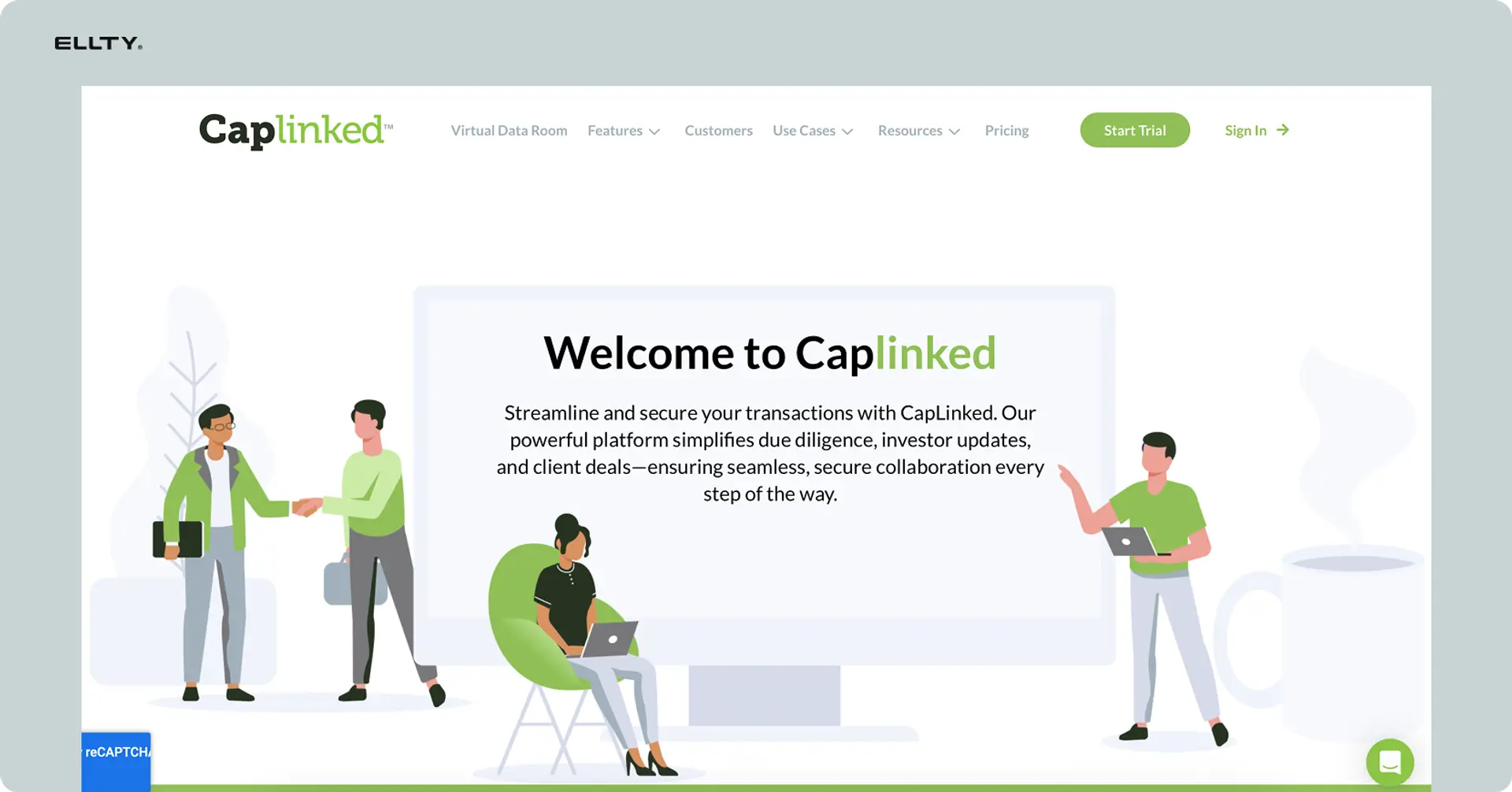
CapLinked focuses on fundraising and corporate development with built-in workflow automation. We looked at this platform because it emphasizes startup fundraising use cases over traditional M&A, providing a different angle than DealRoom's corporate development focus.
DealRoom vs CapLinked


Why fundraising teams appreciate the automation
According to user reviews and product documentation, CapLinked automates repetitive fundraising tasks like sending investor follow-ups, organizing uploaded documents, and tracking which investors completed due diligence checklists. Users mention this coordination helps during busy fundraising rounds.
The platform includes investor relationship management tools. You can track communication history with each potential investor, note their interests and feedback, and monitor engagement levels with your materials. Users report this helps prioritize follow-ups when managing many concurrent investor conversations.
CapLinked offers task management features for coordinating internal teams. You can assign specific documents or questions to team members and track completion status. For fundraising involving finance, legal, and product teams, this coordination helps keep everyone aligned.
Pricing starts lower than enterprise-focused platforms. At $149/month for basic plans, smaller companies can access virtual data room features without enterprise budgets. Users mention this matters for seed and Series A companies running their first formal fundraising process.
DealRoom optimizes for corporate development teams tracking acquisition pipelines. CapLinked optimizes for startups raising capital. The workflows, terminology, and features reflect these different use cases. If you're fundraising, CapLinked's startup-focused approach might feel more natural than M&A-centric platforms.
Best for: Startups and mid-market companies raising capital who want fundraising workflow automation beyond basic document sharing
Pricing: Starts at $149/month; custom pricing for larger teams
The Starter plan includes basic VDR features with limited automation. Higher tiers unlock advanced workflow tools and investor management features.
Support:
Email and phone support during business hours. Users report helpful onboarding assistance for workflow configuration.
"CapLinked's automated investor tracking helped us manage 40+ investor conversations during our Series A. We knew exactly who needed follow-up."
- VP Finance, Series A startup, Capterra
7. DocSend - For document tracking and engagement
Ratings and Reviews: G2: 4.5/5 ⭐ | Capterra: 4.6/5 ⭐

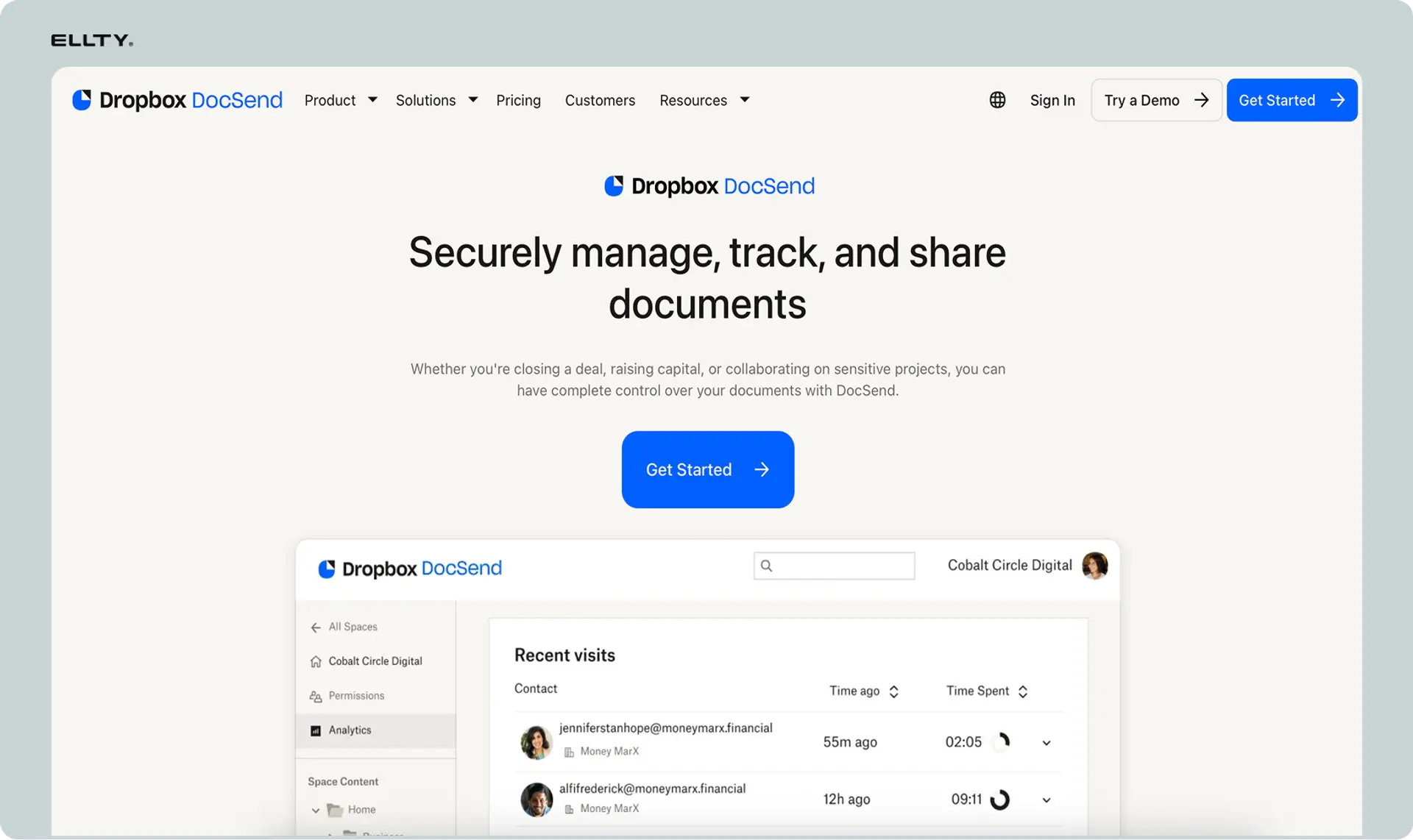
DocSend focuses on document engagement analytics rather than M&A project management or virtual data rooms. We tested it because it serves fundraising teams and sales organizations differently than DealRoom's deal management approach.
DealRoom vs DocSend


Why sales teams and founders choose it
When we tested DocSend, the engagement analytics showed exactly how long viewers spent on each page and when they forwarded documents to colleagues. For fundraising, this insight helps understand investor interest levels. For sales, it reveals which proposal sections resonate with potential clients.
The email verification feature stood out. You can require viewers to enter their email before accessing documents. We tested this with sample materials and it helped identify exactly who accessed what, even when links were shared beyond intended recipients.
DocSend integrates with tools like Salesforce, HubSpot, and Gmail. In our testing, we could send tracked links directly from Gmail and see open rates without leaving our inbox. Sales teams appreciate this workflow integration.
DealRoom manages entire M&A deal pipelines with project tracking across multiple transactions. DocSend tracks engagement with individual documents. If you're running corporate development and need to manage acquisition pipelines, DealRoom's approach fits better. If you're fundraising or in sales and want to know who engaged with your materials and how, DocSend focuses on that specific need.
One thing we noticed: the per-user pricing adds up for teams. You pay for internal team members, though external viewer tracking is unlimited. For small fundraising teams sharing with many investors, this model works. For larger sales organizations, costs scale with team size.
Best for: Sales teams and founders who need detailed document engagement analytics integrated with CRM and email tools, not M&A project management
Pricing: Starts at $10/user/month (Personal plan); Team plans from $65/user/month
We tested the Personal plan, which includes document tracking, email verification, and basic analytics.
Support:
Email and chat support during business hours. Knowledge base covers common use cases. We tested support by asking about integration setup and received helpful responses within a day.
"DocSend's engagement metrics helped us understand which slides investors actually cared about. We restructured our entire deck based on the data."
- SaaS Founder, Series A stage, G2
Cheapest DealRoom alternatives
If you're watching costs carefully, several affordable alternatives offer virtual data rooms and document sharing:
1. Ellty

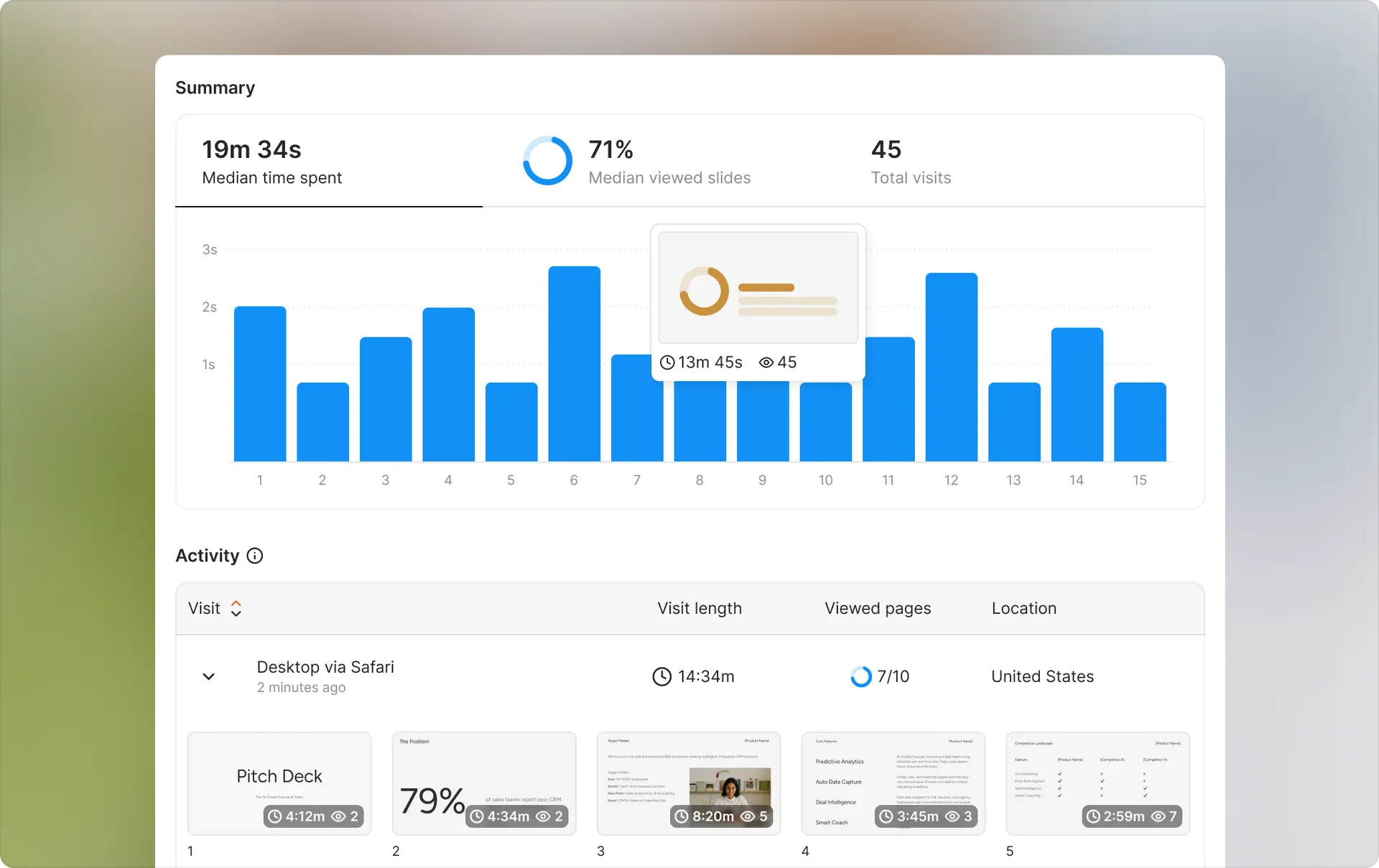
Starting at $0 forever, Ellty is the most affordable full-featured option we tested for document sharing, investor analytics, and virtual data rooms. You get real-time engagement notifications, page-by-page viewer tracking, and an aggregate visit dashboard on the free plan - with eSignatures, full data room functionality, NDA gating, granular permissions, and dynamic watermarking unlocked from $69/month.
The platform focuses on fundraising simplicity. Upload your documents, organize due diligence materials in structured data rooms, create trackable links, and see exactly who viewed which pages and for how long. For founders raising capital who need reliable investor engagement data and a clean due diligence process without M&A project management complexity, it covers everything that matters. Setup takes minutes, not hours.
You're not getting deal pipeline tracking or multi-transaction management like DealRoom provides. But if you're sharing fundraising documents and managing due diligence for a single fundraising round, Ellty handles that specific need - document tracking, eSignatures, and a full virtual data room - at a fraction of enterprise VDR costs.
2. CapLinked
At $149/month for the Starter plan, CapLinked provides virtual data room features with workflow automation for fundraising. More expensive than pure document sharing tools, but significantly cheaper than enterprise M&A platforms requiring custom quotes.
The pricing includes task management, investor tracking, and automated workflows. For startups running their first formal fundraising round who need more than basic file sharing but don't require full M&A pipeline management, CapLinked hits a middle ground. You get proper data room features with predictable monthly pricing you can budget without sales negotiations.
3. DocSend
Starting at $10/user/month for Personal plans, DocSend offers document engagement analytics at accessible price points. You get page-by-page tracking, email verification, and viewer analytics. Team plans at $65/user/month add collaboration features and deeper integrations.
For small fundraising teams - one or two people sharing with multiple investors - the per-user model works. You pay for your internal team, not external viewers. The engagement analytics help understand investor interest without paying for full VDR infrastructure or M&A project management features.
How to choose the right DealRoom alternative
After testing all these alternatives, here's what we'd consider if we were choosing for our own business:
Your use case
Are you managing a corporate M&A pipeline, running a single transaction, or raising capital? The use case determines which features actually matter. We found that full M&A project management platforms like DealRoom make sense for corporate development teams handling multiple concurrent acquisitions. For single transactions, pure virtual data rooms like Firmex or Datasite provide security without pipeline tracking overhead. For fundraising, platforms like CapLinked or Ellty use startup terminology and workflows.
How many deals are you managing simultaneously? If you're a serial acquirer tracking opportunities across different stages, DealRoom's pipeline management adds value. If you're running one deal at a time, you're paying for multi-deal features you won't use.
Budget and deal size
Enterprise platforms vs. mid-market tools impact costs dramatically. We calculated the difference: Datasite and Intralinks optimize for large, complex transactions with pricing that reflects enterprise positioning. For smaller deals, you're paying for infrastructure built for billion-dollar transactions.
Custom pricing vs. transparent rates affects evaluation speed. Some platforms require sales conversations and custom quotes. Others publish transparent pricing you can evaluate immediately. If you need to budget quickly or have limited purchasing authority, transparent pricing removes friction.
DealRoom uses custom pricing for its M&A project management platform. Alternatives range from $0 (Ellty) to enterprise-level costs comparable to Datasite. Your deal size, team size, and feature needs determine which pricing model makes sense.
Technical requirements
M&A project management vs. pure VDR matters if you're tracking multiple deals. DealRoom integrates pipeline tracking with virtual data room features. Pure VDR platforms like Firmex focus on security and document management for individual transactions. If you don't need pipeline visibility across multiple deals, you're paying for project management features that add complexity without value.
Integration needs depend on your existing tools. DealRoom integrates with Slack, Excel, and common M&A tools. DocSend connects to Salesforce and Gmail for sales workflows. CapLinked offers fundraising-specific integrations. If your team relies on specific systems, check integration compatibility before committing.
Security certifications matter for institutional buyers and regulated industries. Enterprise platforms like Datasite and Intralinks hold comprehensive certifications that satisfy stringent requirements. Mid-market alternatives offer solid security with fewer compliance credentials. Match certification requirements to your buyers' expectations.
Analytics and insights needs
Deal pipeline analytics vs. document engagement analytics serve different purposes. DealRoom shows you deal progress across your pipeline. DocSend and Ellty show you document viewing behavior. Ansarada provides AI-powered bidder scoring. Different analytics for different questions.
We tested analytics by using these platforms with sample documents. DealRoom helps answer "where are our deals in the pipeline?" DocSend and Ellty answer "did this specific investor actually read our deck?" Ansarada answers "which bidders are most likely to close?" Match analytics to the questions that matter for your process.
Support and setup complexity
Guided setup vs. self-service affects time to launch. Firmex assigns dedicated project managers. Datasite and Intralinks provide enterprise onboarding. Ellty and DocSend let you start immediately without calls or training. Your timeline and internal expertise determine which approach works better.
We noticed setup times ranging from minutes (Ellty, DocSend) to days or weeks (enterprise platforms). For time-sensitive transactions, faster deployment matters. For complex deals with extensive document organization needs, guided setup reduces configuration mistakes.
Common questions about DealRoom alternatives (from our testing)
What is DealRoom best known for?
DealRoom is best known for combining virtual data room capabilities with M&A project management. The platform helps corporate development teams track multiple acquisition opportunities across pipeline stages while managing due diligence documents. It integrates with tools like Slack and Excel to streamline workflows for serial acquirers. The approach differs from traditional virtual data rooms by adding deal tracking and project management layers specifically for M&A teams.
Why do businesses look for DealRoom alternatives?
Based on our conversations with teams, several reasons come up: some need pure virtual data rooms without project management complexity for single transactions. Others want fundraising-specific features and terminology instead of M&A-focused workflows. A few prefer enterprise-grade platforms with decades of market presence for large deals. Some teams want simpler document sharing with analytics for pitch decks rather than full deal management. Pricing transparency also matters - teams appreciate alternatives with clear monthly rates they can evaluate without sales calls.
Are these alternatives cheaper than DealRoom?
It depends on your needs and deal complexity. DealRoom uses custom pricing for its M&A project management platform. Alternatives range from $0 (Ellty Starter plan) to enterprise costs for platforms like Datasite and Intralinks. Mid-market options like CapLinked start at $149/month with transparent pricing. Document sharing tools like DocSend begin at $10/user/month. If you don't need multi-deal pipeline tracking, simpler alternatives cost less. If you're running large enterprise transactions, expect comparable or higher costs for platforms like Datasite.
Which alternative is best for early-stage startups?
For early-stage fundraising, we'd recommend Ellty or CapLinked. Ellty offers pitch deck sharing with investor analytics at $0-$50/month flat rate. Simple setup, clear engagement tracking, basic data room features for due diligence documents. CapLinked at $149/month adds fundraising workflow automation and investor relationship management. Both use startup terminology and workflows rather than corporate M&A language. Neither requires enterprise budgets or complex setup processes designed for serial acquirers.
Do I need M&A project management features like DealRoom offers?
It depends on how many deals you're managing. If you're a corporate development team tracking multiple acquisition opportunities across pipeline stages, DealRoom's project management features help coordinate deal flow. You're managing a portfolio of potential transactions, and pipeline visibility matters.
If you're running a single transaction - one M&A deal, one fundraising round, one real estate sale - you probably don't need multi-deal pipeline tracking. A focused virtual data room or document sharing platform handles single-transaction needs without the complexity of deal management infrastructure.
Can I switch from DealRoom to another platform easily?
Document migration is straightforward - you download files from DealRoom and upload them to your new platform. Most alternatives accept bulk uploads and maintain folder structures.
The challenge is losing deal pipeline data if you switch to a pure VDR platform. DealRoom tracks deal progress across stages with project management features. If you switch to Firmex or Datasite, you get virtual data room capabilities but not pipeline tracking. You'll need separate tools or spreadsheets to track deal flow.
Also consider: external parties with existing DealRoom access need new credentials for your new platform. For active transactions, switching mid-process creates friction. Plan migrations during transition periods between deals rather than during active due diligence.
What's the difference between DealRoom and traditional virtual data rooms?
DealRoom combines virtual data room capabilities with M&A project management. You're tracking multiple deals across pipeline stages while managing due diligence documents. The platform integrates project tracking, task management, and collaboration features specifically for corporate development teams.
Traditional virtual data rooms like Firmex, Datasite, and Intralinks focus purely on secure document storage and sharing for individual transactions. You get maximum security, granular permissions, and compliance certifications, but not multi-deal pipeline tracking or project management features.
Use DealRoom when you're managing a portfolio of acquisition opportunities and need pipeline visibility. Use traditional VDRs when you're running a single transaction and need maximum security without project management overhead.
How important are AI features for deal management?
It depends on your deal complexity and decision-making process. Ansarada's AI bidder scoring helps identify serious buyers early in competitive processes. If you're managing auctions with many interested parties and limited time to evaluate each one, AI insights help prioritize attention.
For straightforward transactions with few bidders or fundraising with known investors, AI predictions matter less. Basic analytics showing who viewed which documents might be sufficient.
We found AI features add cost and complexity. They're valuable for sophisticated deal teams running competitive processes where intelligence about buyer seriousness provides strategic advantage. For simpler deals, traditional analytics work fine.
Our final thoughts on DealRoom alternatives
After weeks of testing these tools, we learned that no single platform works for every situation. The M&A and deal management landscape offers options ranging from pure virtual data rooms to comprehensive project management platforms.
We found Datasite and Intralinks great for large enterprise M&A where market presence and security certifications matter. Firmex suited mid-market teams wanting VDR features with guided setup. Ansarada worked for teams valuing AI-powered deal intelligence. CapLinked fit startup fundraising with workflow automation. DocSend handled document engagement analytics without deal management complexity.
For pitch deck sharing and fundraising where you need analytics without M&A project management overhead, Ellty provides clear viewer tracking and basic data room features at flat-rate pricing. The setup takes minutes, and you avoid paying for pipeline tracking features designed for serial acquirers.
Choose based on your actual needs. Managing a corporate acquisition pipeline requires different tools than raising a Series A round. Large M&A transactions need different infrastructure than sharing pitch decks with angel investors. Your use case, budget, team size, and deal complexity determine the right platform.
Whether you go with Ellty for straightforward fundraising analytics or Datasite for complex enterprise M&A, pick what actually solves your problems. The best deal management platform is the one that matches your specific workflow and transaction type.
Disclaimer
Parties other than Ellty may provide products, services, recommendations, or views on this site ("Third Party Materials"). Ellty is not responsible for examining or evaluating such Third Party Materials, and does not provide any warranties relating to the Third Party Materials. Links to such Third Party Materials are for your convenience and does not constitute an endorsement of such Third Party Materials.
Author

Anika Tabassum Nionta is a Content Manager at Ellty, where she writes about secure document sharing, virtual data rooms, M&A, due diligence, fundraising, and sales enablement. With over 6 years of writing experience, she helps professionals understand how to share confidential documents securely, track engagement, and manage deals more effectively. Anika holds both a BA and MA in English from Dhaka University. Outside of work, she enjoys reading, exploring new cafes in Dhaka, and connecting with entrepreneurs and dealmakers in her community.

