
Visible handles pitch deck sharing and fundraising analytics well. Plenty of startups use it to track investor engagement and manage their fundraising process. The platform focuses specifically on fundraising workflows, which makes it strong for that use case.
We've been testing alternatives to Visible for the past few months. Our motivation was simple - some teams need broader virtual data room features, others want simpler analytics without fundraising-specific workflows, and several founders mentioned wanting different pricing structures. Visible works great if you're deep in fundraising mode, but not every business needs that level of specialization.
We've personally tested 9 alternatives that handle pitch deck sharing, analytics, and secure document management differently. Some focus on pure simplicity, others offer enterprise-grade data rooms, and a few strike a middle ground with founder-friendly features. Here's what we discovered after weeks of hands-on testing.
Key takeaways
- The pitch deck sharing and data room market offers many Visible alternatives, each with different strengths for simplicity, analytics depth, or enterprise security features.
- Several alternatives offer better pricing structures, unlimited document sharing, and faster setup compared to Visible's fundraising-focused model.
- Many modern solutions separate document analytics from investor pipeline management, providing more focused tools for specific needs.
Why look for a Visible alternative?
Visible handles fundraising management and investor relations well. The platform gives you clear tools to track your investor pipeline, send updates, and analyze engagement with your fundraising materials. For startups actively raising capital with multiple investors to manage, that's valuable functionality.
But Visible isn't the only option, and it's not always the best fit for every team.
Better features for the price
Several alternatives offer comparable document sharing and analytics with additional features at similar or lower costs. Some include robust virtual data room capabilities that Visible doesn't emphasize. Others provide simpler pitch deck sharing without requiring you to set up entire fundraising workflows.
We found tools that offer flat-rate pricing instead of scaling costs based on your company's ARR or stage. Some alternatives focus purely on document analytics without the investor CRM layer, which saves money if you don't need pipeline management. Others include features like document creation, watermarking, or advanced security controls that Visible lacks entirely.
Different workflow needs
Visible focuses specifically on fundraising workflows and investor relations. That's great if you're in active fundraising mode with investor pipelines to manage. But if you're just sharing pitch decks occasionally, managing due diligence documents, or need secure data rooms for partnerships or M&A, you might benefit from a different approach.
Some teams need simpler tools without the setup overhead. Others need deeper enterprise data room features for complex transactions. The right alternative depends on what you're actually trying to accomplish beyond fundraising-specific workflows.
Cost considerations
Visible's pricing structure scales with your company metrics, which can feel unpredictable as you grow. We found alternatives with transparent flat-rate pricing that make more sense for budget planning, and others with generous free tiers that work fine for early-stage founders.
Feature access also matters. Some alternatives offer unlimited document sharing and full analytics at entry-level pricing where Visible gates certain capabilities behind higher tiers. For teams sharing documents frequently or managing multiple fundraising materials simultaneously, this makes a real difference.
Visible alternatives overview
Here are the best Visible alternatives in 2026 for pitch deck sharing and fundraising (in our opinion)
- Ellty - Managed document sharing with real-time analytics, eSignatures, and virtual data rooms
- DocSend - Enterprise document tracking with deep analytics
- PandaDoc - Full document creation and e-signatures
- Digify - Document security platform with watermarking
- Papermark - Open-source document sharing
- Pitch - Built-in deck builder with sharing
- Notion - Universal workspace with basic sharing
- Brieflink - Ultra-simple page-by-page analytics
- FirmRoom - Enterprise virtual data room for M&A
What are the best Visible alternatives?
The best Visible alternative depends on what you're actually trying to accomplish.
For most pitch deck sharing: Ellty gives you secure sharing, page-by-page analytics, and virtual data room capabilities without the fundraising workflow overhead. Upload your deck, get a trackable link, see exactly who viewed what. No investor pipeline setup required, no costs scaling with your company metrics.
For document workflows: PandaDoc when you need more than just tracking. Create proposals, add e-signatures, collect payments, all in one place. Good for teams sending contracts and client documents alongside pitch decks. The analytics aren't fundraising-focused, but the workflow coverage is broader.
Open-source route: Papermark if you want full control. Self-host for free, keep documents on your own infrastructure, customize everything. You manage the technical side yourself, but you own the data completely. Hosted version available if you want simplicity.
All-in-one deck creation: Pitch when you're building decks from scratch and want sharing built in. Real-time collaboration, professional templates, then share directly from the platform. Analytics are lighter than Visible, but you're not jumping between tools.
Security-first approach: Digify when document control matters more than ease of use. Dynamic watermarking, screenshot prevention, access revocation. Takes longer to set up, costs more, but investors in sensitive industries expect this level of security.
Already using it anyway: Notion if you just need basic sharing with your existing workspace. Everyone on your team has access already. No learning curve, no extra cost, but you won't get investor-specific analytics or fundraising pipeline management.
Enterprise M&A focus: FirmRoom when you're managing serious acquisition due diligence. Complex permissions, audit trails, Q&A management. Overkill for early fundraising, perfect for late-stage deals with extensive document requests.
Bare minimum tracking: BriefLink when you only need to know if someone viewed your deck and which pages. $12/month, nothing fancy, but it answers the basic question: did they actually look at it?
Different needs, not better or worse. Visible works well for active fundraising with investor pipeline management. These alternatives just handle different scenarios or priorities. Pick based on whether you need simple analytics, workflow breadth, cost control, or technical flexibility.
Types of Visible alternatives
Visible alternatives fall into different categories based on what they actually do.
Secure document sharing with analytics - The core tracking model without fundraising workflows. Upload a file, share a trackable link, see who viewed what and for how long. Ellty, Papermark, and BriefLink follow this approach. You're tracking engagement, not managing investor pipelines or CRM data. Perfect for pitch decks, due diligence documents, and investor updates where knowing "did they read it?" matters without needing fundraising-specific features.
Document workflow platforms - More than just sharing. PandaDoc fits here. Create documents from scratch, add e-signatures, collect payments, then track everything. You're managing the entire document lifecycle in one place. Good when you need proposals, contracts, and pitch materials all handled through the same system beyond fundraising contexts.
Collaborative deck builders - Create and share without jumping between tools. Pitch does this. Build your presentation inside the platform with real-time team editing, then share it directly. The analytics are lighter than Visible's investor tracking, but you're not exporting from one tool and uploading to another.
Enterprise security platforms - When control matters more than convenience. Digify and FirmRoom focus here. Watermarking, screenshot prevention, remote access revocation, granular permissions. Setup takes longer, costs more, but you get security features that basic sharing tools don't offer. Built for sensitive M&A documents or late-stage due diligence where leaks have real consequences.
Universal workspace tools - General-purpose platforms that happen to share files. Notion fits here. Everyone on your team already uses it for docs and wikis, they integrate with everything, but analytics are minimal compared to Visible. You can share a pitch deck through Notion, but you won't get investor engagement metrics or pipeline tracking.
Document creation platforms - Full presentation builders with sharing as a secondary feature. Pitch builds here. Professional templates, design tools, collaboration features, then basic sharing analytics. The opposite of Visible's upload-and-track approach - you're creating content first, sharing second.
Minimalist trackers - Stripped-down analytics without the complexity. BriefLink is the example. Upload a PDF, get a link, see page views. No investor pipelines, no integrations, no learning curve. Answers one question: did they look at it?
Enterprise data rooms - Complex permission structures for serious transactions. FirmRoom sits here. Folder hierarchies, audit logs, Q&A management, compliance reporting. Overkill for Series A fundraising, necessary for M&A or heavily regulated industries.
Different problems, different tools. Visible sits in the fundraising management category with document sharing as one component. These alternatives either do document sharing differently, or solve adjacent problems entirely. Pick based on whether you need tracking depth, fundraising workflows, document creation, or just simple file sharing with basic analytics.
Quick comparison: Visible alternatives at a glance


We tested each of these tools ourselves. Below, we'll break down what we found - the good, the specific use cases, and who each one works best for.
1. Ellty - For fast setup and clear pitch deck analytics
Ratings and Reviews: Recently launched - early users highlight quick setup and straightforward analytics

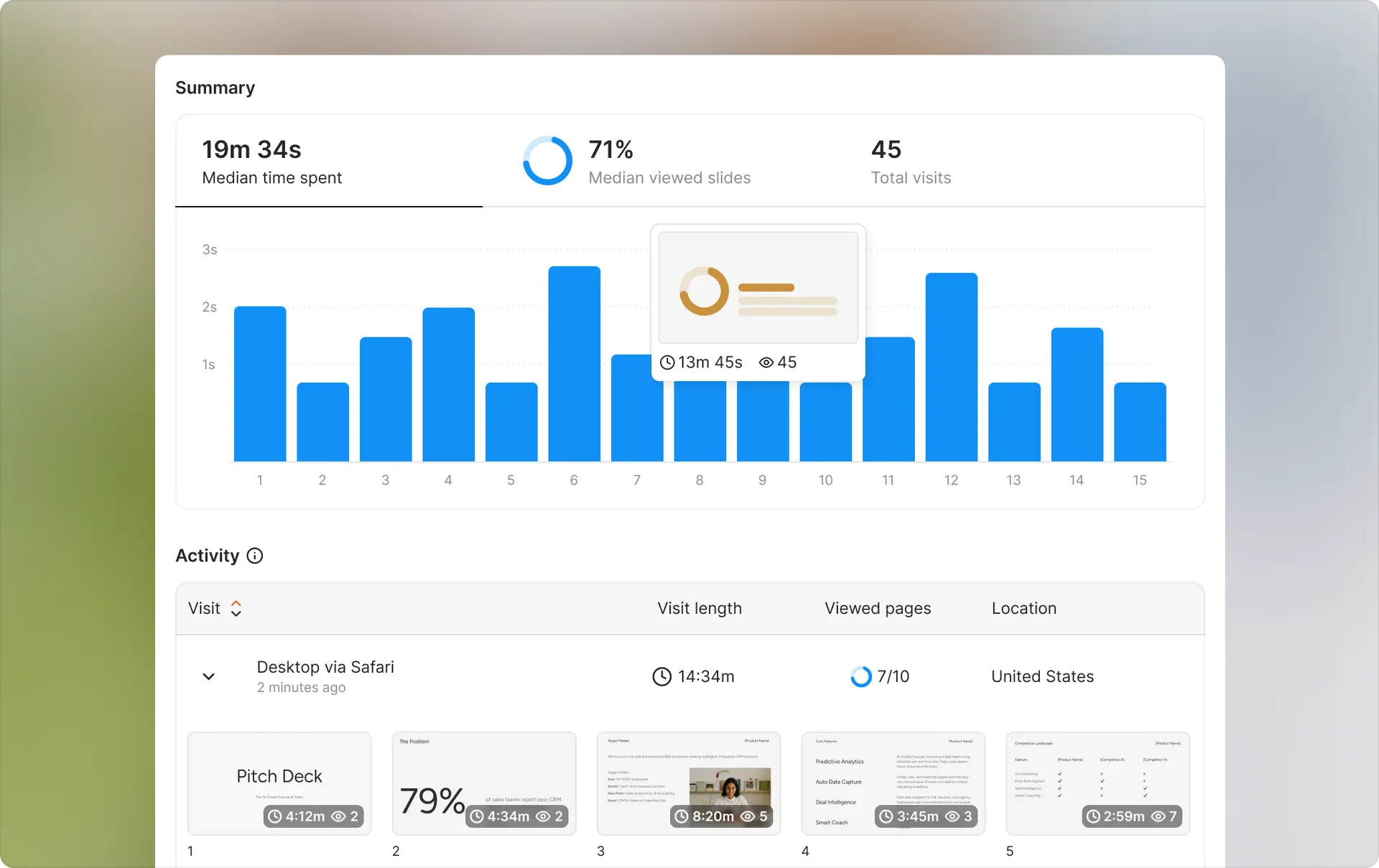
We tried Ellty early in our testing because we wanted to see how a newer platform approached pitch deck sharing without the complexity of enterprise tools. Ellty offers pitch deck sharing, viewer analytics, and virtual data room features built specifically for startup founders. What we appreciated most was how quickly we got our first deck uploaded and trackable link created - less than five minutes from signup to sharing.
Visible vs Ellty


Why startup founders love it
When we tested this with a sample pitch deck, the upload process was dead simple. Drag and drop, create a link, and you're done. The analytics showed exactly which pages viewers spent time on and when they returned to specific sections. We found this particularly useful when you need quick insights without setting up complex investor pipelines.
Founders we talked to mentioned appreciating that Ellty doesn't force you into a fundraising-specific workflow. You upload decks, get trackable links, and see who viewed what. The virtual data room feature lets you organize due diligence documents alongside your pitch deck, which several early-stage founders found helpful when investors started asking for financials and legal docs.
In our testing, the real-time notifications stood out because they're not overwhelming. You get pinged when someone views your deck, but it's not constant alerts for every page turn. The analytics focus on practical metrics - time spent, pages viewed, return visits - without trying to predict investor interest scores.
Best For: Founders who need quick pitch deck sharing with viewer analytics without fundraising workflow complexity
Pricing: Free basic tier; Pro from $29/month for unlimited decks and advanced analytics
Support: Email support with responses typically within 24 hours. Knowledge base covers setup and common use cases.
"Setup took minutes, not hours. The analytics show exactly what investors looked at without overcomplicating things."
- Startup Founder, Pre-seed Stage, Early User Feedback
Try Ellty if you need straightforward pitch deck analytics without the overhead of investor pipeline management. You can test it with their free tier to see if the approach fits your needs.
2. DocSend - For enterprise teams needing detailed tracking
Ratings and Reviews: G2: 4.5/5 ⭐ | Capterra: 4.6/5 ⭐ | Trustpilot: 4.2/5 ⭐

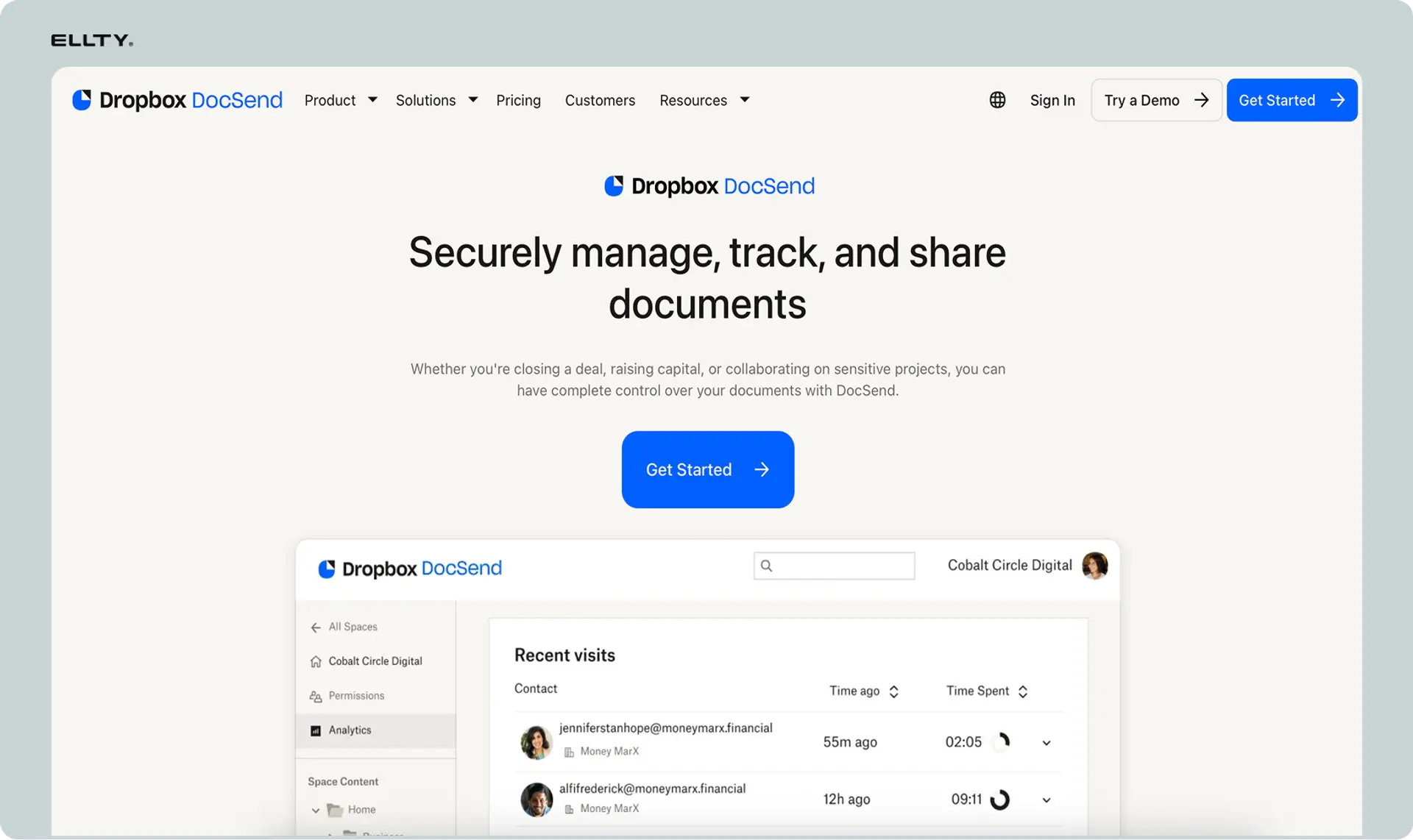
We tested DocSend extensively because it's one of the most established names in this space. DocSend offers comprehensive document sharing with deep analytics, viewer permissions, and Dropbox integration. The platform handles pitch decks well but also works for any secure document sharing scenario.
Visible vs DocSend


Why businesses love it
When we tested DocSend with multiple document types, the analytics went deep. You see not just who viewed what, but time spent per page, geographic location, device type, and even whether they downloaded or forwarded your link. The email verification feature lets you gate access, which we found useful for sensitive documents.
We found this particularly useful when you need to share documents beyond pitch decks. Legal agreements, financial reports, marketing materials - DocSend handles them all with the same level of tracking. The Dropbox integration means you can sync folders and keep documents updated automatically.
In our testing, the NDA feature stood out. You can require viewers to sign an NDA before accessing documents, which several legal and finance teams mentioned needing. The watermarking option adds another layer of security by displaying viewer email addresses on each page.
Best For: Teams that need enterprise-grade document tracking across multiple use cases beyond fundraising
Pricing: Starts at $10/user/month for Personal plan; Business plans from $45/user/month
Support: Email and chat support available. Enterprise plans include dedicated account management. Documentation is comprehensive.
"The analytics are incredibly detailed. We know exactly who's engaging with our materials and can follow up strategically."
- VP of Sales, Series B Company, G2
3. PandaDoc - For document workflows beyond pitch decks
Ratings and Reviews: G2: 4.7/5 ⭐ | Capterra: 4.5/5 ⭐ | Trustpilot: 4.3/5 ⭐

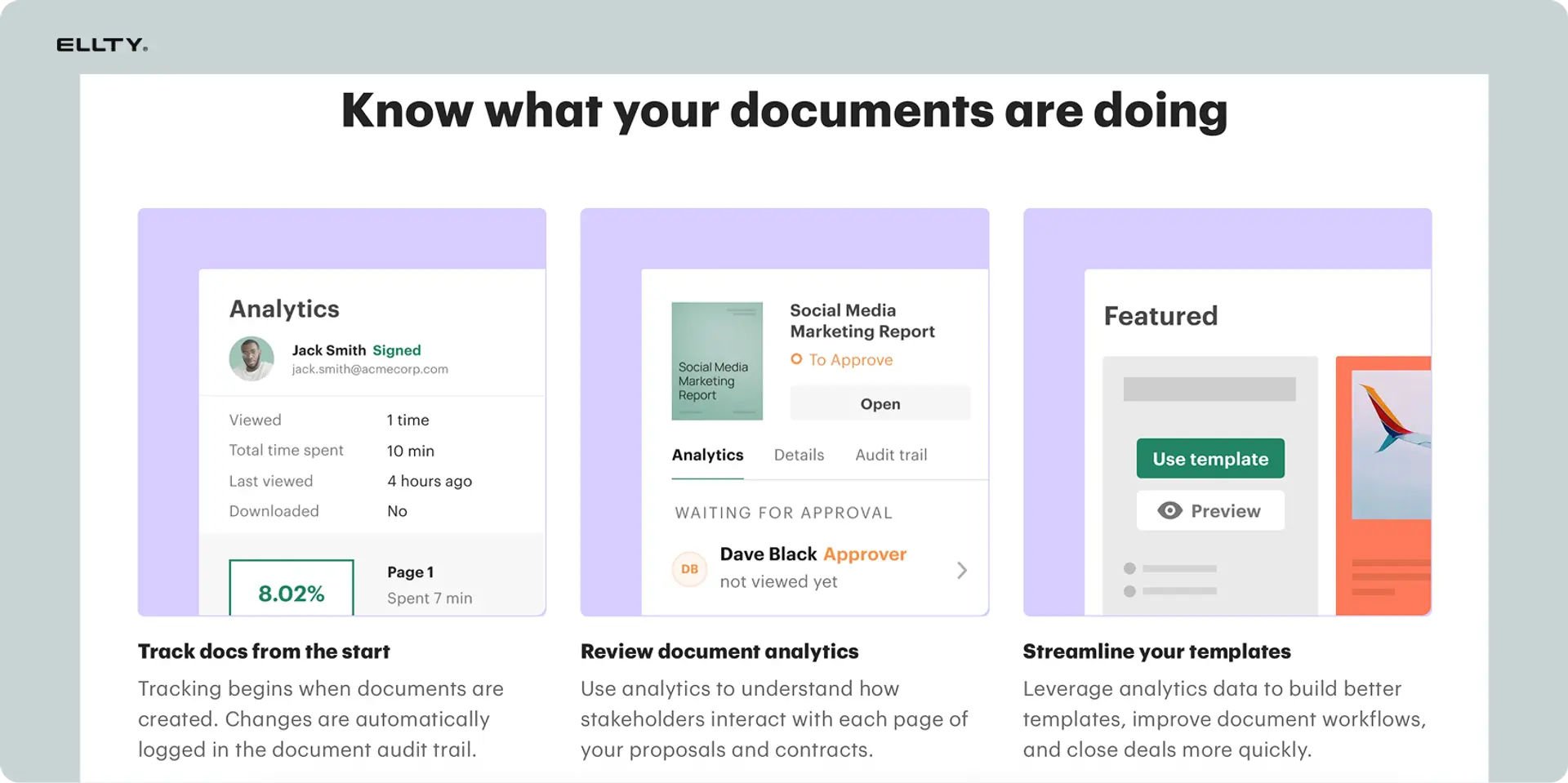
We tried PandaDoc because several founders mentioned using it for more than just pitch decks. PandaDoc offers document creation, e-signatures, workflow automation, and tracking all in one platform. What surprised us was how much it handles beyond simple sharing.
Visible vs PandaDoc


Why teams love it
When we tested this with a sample contract and pitch deck, PandaDoc felt like an all-in-one document platform. You can create documents from templates, add approval workflows, collect e-signatures, and track everything. The pitch deck tracking works, but it's one feature among many.
We found this particularly useful when you need to manage multiple document types in one place. Sales teams use it for proposals, legal teams for contracts, and founders can use it for pitch decks. The approval workflow feature lets you route documents through multiple stakeholders before sending to external parties.
In our testing, the template library stood out. Pre-built templates for contracts, proposals, and agreements save time. The payment collection feature even lets you accept payments directly through documents, which sales teams mentioned appreciating.
Best For: Businesses that need comprehensive document management, not just pitch deck sharing
Pricing: Essentials from $19/user/month; Business from $49/user/month
Support: Email and chat support. Onboarding assistance included with Business plans. Knowledge base is extensive.
"We use it for proposals, contracts, and investor decks. Having everything in one platform with tracking and e-signatures saves hours every week."
- Operations Manager, Growth Stage Startup, Capterra
4. Digify - For secure data rooms with watermarking
Ratings and Reviews: G2: 4.6/5 ⭐ | Capterra: 4.7/5 ⭐


We tested Digify when looking for security-focused alternatives. Digify offers virtual data rooms with advanced security features like screen shields, watermarks, and self-destruct timers. The platform focuses heavily on preventing unauthorized sharing and screenshots.
Visible vs Digify


Why compliance teams love it
When we tested this with confidential documents, the security features impressed us. Dynamic watermarks display viewer information on every page, making screenshots less useful for unauthorized sharing. The screen shield feature attempts to block screen capture tools, though we found it works better on some devices than others.
We found this particularly useful when you're in due diligence with sensitive financial or legal documents. The self-destruct timer lets you set expiration dates on links, and you can revoke access instantly even after sharing. Several founders doing M&A work mentioned needing these features.
In our testing, the file-level permissions stood out. You can grant different access levels to different viewers within the same data room. The audit trail logs every action - views, downloads, time spent - which compliance teams need for record-keeping.
Best For: Teams handling sensitive due diligence where security and audit trails are critical
Pricing: Starts at $99/month flat for Team plan; Business from $229/month
Support: Email support with priority options for higher tiers. Security-focused documentation and setup guides available.
"The watermarking and screen protection give us confidence sharing sensitive M&A documents. The audit trail is detailed enough for compliance."
- CFO, Late Stage Startup, G2
5. Papermark - For open-source document sharing
Ratings and Reviews: Building review history - open-source project with active GitHub community


We tried Papermark because we wanted to test a self-hosted option. Papermark offers open-source document sharing that you can host yourself or use their cloud version. What stood out was the full control over your data and infrastructure.
Visible vs Papermark


Why technical teams love it
When we tested the self-hosted version, setup required some technical knowledge but wasn't difficult with their Docker setup. You get complete control over where your documents live and how data is stored. The analytics are simpler than enterprise tools but cover the basics - views, time spent, geographic data.
We found this particularly useful when you have strict data residency requirements or want to customize the platform. The open-source nature means you can modify features, add integrations, or build on top of it. Several technical founders mentioned appreciating the transparency of open-source code.
In our testing, the pricing flexibility stood out. Self-hosting is free if you have the infrastructure. Their cloud option provides convenience without vendor lock-in since you can migrate to self-hosted later.
Best For: Technical teams wanting control over infrastructure and data or organizations with strict compliance requirements
Pricing: Free (self-hosted); Cloud plans from $29/month
Support: Community support via GitHub. Paid support packages available for cloud customers.
"Having the source code available gives us confidence. We can audit security, customize features, and know exactly how our data is handled."
- CTO, Seed Stage Startup, GitHub Discussion
6. Pitch - For presentation creation and sharing
Ratings and Reviews: G2: 4.5/5 ⭐ | Capterra: 4.3/5 ⭐


We tested Pitch because it approaches the problem differently - focusing on creation as much as sharing. Pitch offers presentation design tools, templates, real-time collaboration, and analytics. Think of it as a modern alternative to PowerPoint with built-in sharing features.
Visible vs Pitch


Why design-conscious founders love it
When we tested this by creating a deck from scratch, the templates saved significant time. Modern, professional designs that you can customize without starting from a blank slate. The real-time collaboration feature lets team members edit simultaneously, which we found useful when iterating quickly.
We found this particularly useful when you don't have a designer on your team. The templates follow current design trends, and the editor is intuitive enough that non-designers can create professional-looking decks. The sharing features include basic analytics - who viewed, when, and for how long.
In our testing, the video recording feature stood out. You can record yourself presenting and attach the video to your deck, which several founders mentioned using for async investor updates. The commenting feature lets viewers leave feedback directly on slides.
Best For: Teams that need both creation and sharing tools without using separate platforms
Pricing: Free tier available; Pro from $8/user/month
Support: Email support and help center. Premium plans include priority support and onboarding.
"We create our investor decks directly in Pitch now. The templates look professional, and sharing with analytics is built right in."
- Founder, Pre-seed Startup, G2
7. Notion - For teams already using Notion workspace
Ratings and Reviews: G2: 4.7/5 ⭐ | Capterra: 4.8/5 ⭐ | Trustpilot: 4.1/5 ⭐

We tried Notion for document sharing because many startups already use it for everything else. Notion offers workspace management where you can share pages, embed documents, and track basic engagement. The analytics are minimal compared to dedicated tools, but the unified workspace approach has appeal.
Visible vs Notion


Why all-in-one teams love it
When we tested sharing documents through Notion, the simplicity was the point. You create a page, add your content (embed PDFs, add text, include images), and share a link. Page analytics show view counts but not detailed tracking like time spent per section.
We found this particularly useful when you're already managing everything in Notion. Your pitch deck, financial models, company wiki, and meeting notes all live in one place. The permission system lets you control who can view, comment, or edit. Several small teams mentioned appreciating not needing another tool.
In our testing, the collaborative aspect stood out. Unlike pure sharing tools, Notion lets viewers comment and discuss. This works well for board updates or internal documents where you want feedback, less well for tracking investor engagement.
Best For: Teams deeply invested in Notion who want to avoid adding another platform
Pricing: Free tier available; Plus from $8/user/month; Business from $15/user/month
Support: Email support, extensive help center, and active community forums. Priority support for Business plans.
"We run our entire company in Notion. Sharing investor updates through the same platform we use for everything else just makes sense."
- COO, Early Stage Startup, Capterra
8. Brieflink - For quick link sharing for decks
Ratings and Reviews: G2: 4.4/5 ⭐ | Recently launched with growing user base

We tested Brieflink when looking for the simplest possible option. Brieflink offers straightforward document sharing with basic analytics and no complexity. Upload, get a link, see who clicked. That's essentially it.
Visible vs Brieflink


Why minimalists love it
When we tested this, we had a shareable link in under 60 seconds. Upload your file, customize the link if you want, copy and share. The analytics show who opened the link, when, and rough time spent. No investor pipelines, no CRM integration, no complexity.
We found this particularly useful when you just need to share something quickly. The focus on speed and simplicity means there's essentially no learning curve. Several founders doing early conversations mentioned appreciating that they can generate a link without setting up profiles or workflows.
In our testing, the custom domain feature stood out for a minimal tool. You can use your own domain for branded links, which adds professionalism. The password protection option adds basic security when needed.
Best For: Founders who want the fastest possible way to share documents with basic tracking
Pricing: Free tier for basic use; Pro from $12/month
Support: Email support and minimal documentation. The simplicity means you rarely need help.
"I don't need complex analytics. I just need to know if someone opened my deck. Brieflink does exactly that with zero fuss."
- Solo Founder, Pre-seed, G2
9. FirmRoom - For M&A and due diligence focus
Ratings and Reviews: G2: 4.6/5 ⭐ | Capterra: 4.5/5 ⭐


We tested FirmRoom because it represents the enterprise end of the spectrum. FirmRoom offers full virtual data rooms designed for M&A transactions, due diligence, and complex deal processes. This isn't a tool for sharing pitch decks casually - it's built for serious transactions.
Visible vs FirmRoom


Why enterprise dealmakers love it
When we tested this with a mock data room, the organizational features were extensive. You can create complex folder structures, set granular permissions by user and file, and track every action in detailed audit logs. The Q&A feature lets you manage due diligence questions within the platform.
We found this particularly useful when you're in serious acquisition talks or late-stage fundraising with extensive due diligence. The reporting features generate compliance-ready audit trails. Index creation tools help organize hundreds or thousands of documents systematically.
In our testing, the project management features stood out. Built-in task assignment, deadline tracking, and stakeholder management tools. This goes well beyond simple document sharing into full deal room management.
Best For: Companies in M&A processes or late-stage rounds with extensive due diligence requirements
Pricing: Custom enterprise pricing based on deal size and requirements. Typically starts around several hundred dollars per month.
Support: Dedicated account managers, 24/7 support available, white-glove onboarding for enterprise clients.
"For our acquisition, we needed enterprise security and detailed audit logs. FirmRoom handled our entire due diligence process with hundreds of documents."
- CFO, Series C Company, G2
Cheapest Visible alternatives
If you're watching costs carefully, several low-price alternatives offer solid document sharing and analytics without fundraising-specific workflows:
1. Ellty
At $69/month for unlimited documents and full analytics, Ellty offers comprehensive document sharing with real-time engagement tracking, eSignatures, and virtual data rooms, all under one roof. You get full data room functionality included, with folder organization, granular permissions, NDA gating, and dynamic watermarking, which many competitors charge significantly more for.
The interface focuses on quick setup - upload documents, create trackable links, manage due diligence in organized data rooms, and see detailed visitor analytics without a steep learning curve.
No investor pipeline management or CRM features, but for founders who need to track document engagement and run a clean due diligence process, it covers everything that matters. The flat pricing keeps costs predictable as your team and investor list grow.
2. Brieflink
At $12/month for unlimited documents, Brieflink is the most affordable option we tested. You get basic page-by-page analytics and sharing links. No team features, no virtual data room, no investor management, but for solo founders tracking investor engagement, it works.
The interface is bare-bones by design. Upload a PDF, get a link, see who viewed which pages. That's it. If you need fundraising workflows or team collaboration, you'll need to look elsewhere, but you won't find a cheaper way to track pitch deck views.
3. Notion
Free for basic use, Notion with Plus at $8/user/month is hard to beat on price if you're already using it for everything else. The catch: you get minimal analytics. You can see page view counts, but not detailed engagement tracking like time spent per section or return visits.
Good enough for internal sharing or board updates where you want collaboration. Not good enough for fundraising where you need to know if an investor actually read your financials or which sections they focused on.
How we chose which Visible alternative to recommend
After testing all these alternatives, here's what we'd consider if we were choosing for our own business:
Your use case matters most. Are you fundraising and need investor-specific tracking? Visible or DocSend make sense. Just need to share decks quickly with basic analytics? Ellty or Brieflink work well. In serious M&A due diligence? FirmRoom or Digify handle enterprise requirements. We found that matching tool complexity to actual needs saves both money and headaches.
Budget and team size impact the math. Per-user pricing adds up fast with tools like DocSend or PandaDoc if you have larger teams. Flat-rate options like Ellty or Digify cost the same whether you have 1 users or 3. For small teams, we'd look at flat-rate or free tiers first. For larger teams already paying for enterprise tools, per-user costs matter less.
Technical requirements narrow options. If you need Salesforce integration, DocSend handles that. Need to self-host for compliance? Papermark lets you do that. Already running everything in Notion? Adding another tool might not make sense. Some tools took hours to set up properly while others worked in minutes - consider how much time you want to invest in setup.
Analytics depth varies significantly. If you're fundraising actively, detailed viewer insights help you follow up strategically. We found tools like DocSend and Visible provide investor-specific metrics that simpler tools skip. If you just need to know whether someone opened your deck, basic tracking from Brieflink or Ellty suffices.
Support and reliability matter during critical moments. When you're closing a deal or in active fundraising, response times matter. We tested support by sending questions to each platform - some responded within hours, others took days. Onboarding help varies too - some tools leave you to figure things out, while others provide setup assistance.
Common questions about Visible alternatives (from our testing)
What is Visible best known for?
Visible specializes in fundraising management and investor relations. The platform helps startups track investor pipelines, manage updates, and analyze engagement with fundraising materials. It's particularly strong for companies actively fundraising who need investor-specific workflows.
Why do businesses look for Visible alternatives?
In our research, three main reasons came up. First, pricing structure - Visible's costs scale with company metrics which doesn't work for every budget. Second, some teams need simpler pitch deck sharing without full fundraising workflow management. Third, businesses outside fundraising mode want virtual data rooms or document sharing for other purposes like partnerships or sales.
Are these alternatives cheaper than Visible?
Depends on your situation. Tools like Brieflink and Ellty offer lower flat-rate pricing that can be cheaper for small teams. Enterprise options like FirmRoom cost more. Free tiers exist for Notion, Pitch, and Papermark. We found that "cheaper" depends on team size, features needed, and usage patterns rather than pure monthly cost.
Which alternative is best for early-stage startups?
From our testing, Ellty and Brieflink work well for early-stage founders. Both offer quick setup, straightforward analytics, and pricing that fits pre-revenue budgets. If you're already using Notion for everything, staying within that ecosystem makes sense too. Avoid enterprise tools like FirmRoom unless you're in serious acquisition talks.
Do I need a virtual data room for fundraising?
Not always for initial pitches, but yes once investors get serious. Early conversations often just need pitch deck sharing. When investors want to see financials, legal docs, and company records during due diligence, a proper data room becomes necessary. Several founders mentioned scrambling to set one up after getting investor interest - better to have it ready.
Can I switch from Visible to another tool easily?
Most document sharing tools let you export files easily since you're typically uploading standard formats like PDFs. The challenge is migrating analytics history and investor contact data. We'd recommend testing a new tool alongside Visible for a few weeks before fully switching to ensure it handles your needs.
What's the difference between Visible and DocSend?
Visible focuses specifically on fundraising workflows with investor pipeline management. DocSend offers broader document sharing with detailed analytics but less fundraising-specific features. DocSend works for any secure document sharing scenario while Visible is purpose-built for startups raising capital. Both track engagement, but Visible interprets that data through a fundraising lens.
Our final thoughts on Visible alternatives
After weeks of testing these tools, the landscape of options is broader than we expected. Different tools serve genuinely different needs - there's no single "best" option that works for everyone.
We found Ellty great for straightforward pitch deck analytics without complexity, while FirmRoom suited serious M&A processes. DocSend worked well when teams needed enterprise features across multiple document types, while Brieflink served founders who just wanted the fastest possible sharing. Each tool has legitimate strengths for specific situations.
Choose based on what you actually need. If you're deep in fundraising with complex investor pipelines, Visible's specialization makes sense. If you need quick pitch deck sharing with clear analytics, simpler tools work fine. If you're managing full due diligence, enterprise data rooms become necessary.
Whether you go with Ellty for quick setup and clear analytics or DocSend for enterprise tracking or any other tool that fits your situation, pick what actually solves your problems. We're happy to answer questions about specific use cases if our testing can help.
Disclaimer
Parties other than Ellty may provide products, services, recommendations, or views on this site ("Third Party Materials"). Ellty is not responsible for examining or evaluating such Third Party Materials, and does not provide any warranties relating to the Third Party Materials. Links to such Third Party Materials are for your convenience and does not constitute an endorsement of such Third Party Materials.
Author

Anika Tabassum Nionta is a Content Manager at Ellty, where she writes about secure document sharing, virtual data rooms, M&A, due diligence, fundraising, and sales enablement. With over 6 years of writing experience, she helps professionals understand how to share confidential documents securely, track engagement, and manage deals more effectively. Anika holds both a BA and MA in English from Dhaka University. Outside of work, she enjoys reading, exploring new cafes in Dhaka, and connecting with entrepreneurs and dealmakers in her community.

